| Quantity: | |
|---|---|


| Lead equivalent (mmPb) | Reference thickness range (mm) | Typical application scenarios |
|---|---|---|
| 8mmPb | 20–30mm | CT room observation window, general nuclear medicine |
| 10mmPb | 25–35mm | High energy CT and interventional operating room |
| 15mmPb | 35–50mm | Nuclear medicine treatment area, industrial flaw detection |
| 20mmPb | 45–60mm | Radiotherapy room, high-energy radiation shielding |
| 30mmPb | 65–85mm | Heavy ion therapy, accelerator room |
| 40mmPb | 90–110mm | High energy industrial irradiation and scientific research equipment |
| 50mmPb | 110–140mm | Special nuclear facilities, high-energy physics experiments |
| 60mmPb | 130–160mm | Ultra high energy radiation shielding, special protection |
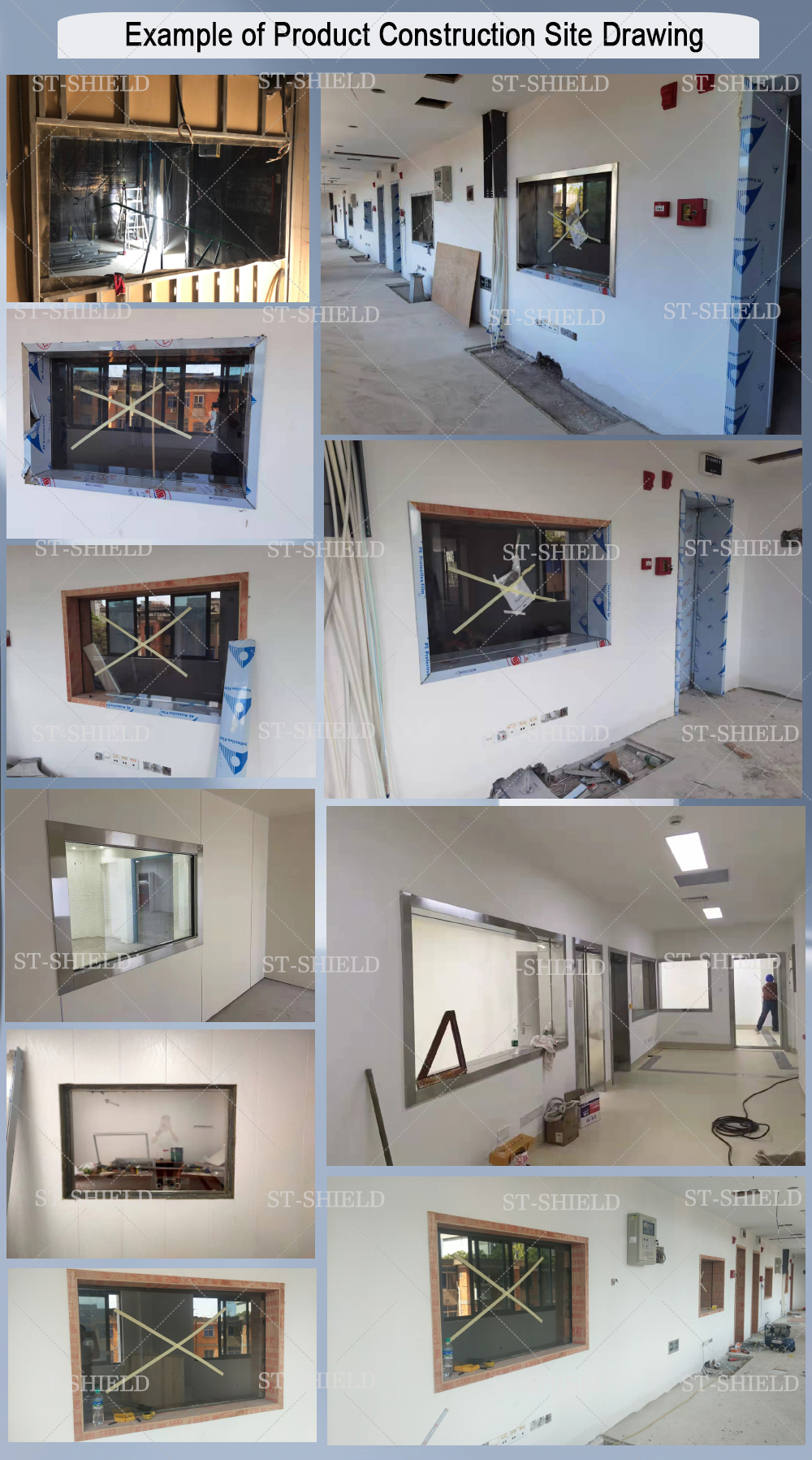
 Lead Glass
 Lead Glass
| Type | Common dimensions (mm) |
|---|---|
| Standard observation window | 600×800 / 800×800 / 900×900 / 1000×1000 |
| Large observation window | 1200×800 / 1500×800 / 1500×1000 |
| Customized large size | 2000×1000 / 2000×1200 / 2000×1500 |


1. Protecting healthcare workers
Radiologists and technicians are exposed to radiation repeatedly every day, and lead glass windows allow them to observe patients clearly in a safe area (control room/operating room) while avoiding direct exposure to the radiation field.
2. Protecting patients' families and the public
The partition walls and windows between the waiting area, corridor, and radiology department also need to be protected to prevent radiation leakage into public areas.
3. Easy to observe in real-time
Lead glass transmittance ≥ 80%, doctors can:
Observe whether the patient's position is correct
Observe the patient's condition (whether there is discomfort or agitation)
Observe whether the protective door is closed properly
Guide patients to cooperate with the examination