Product Overview
Lead glass (also known as radiation-proof lead glass or X-ray protective glass) is a type of lead-containing optical glass primarily used for observation windows in medical radiology departments, nuclear medicine, and industrial flaw detection, achieving the dual functions of "light transmission observation" and "radiation protection.".
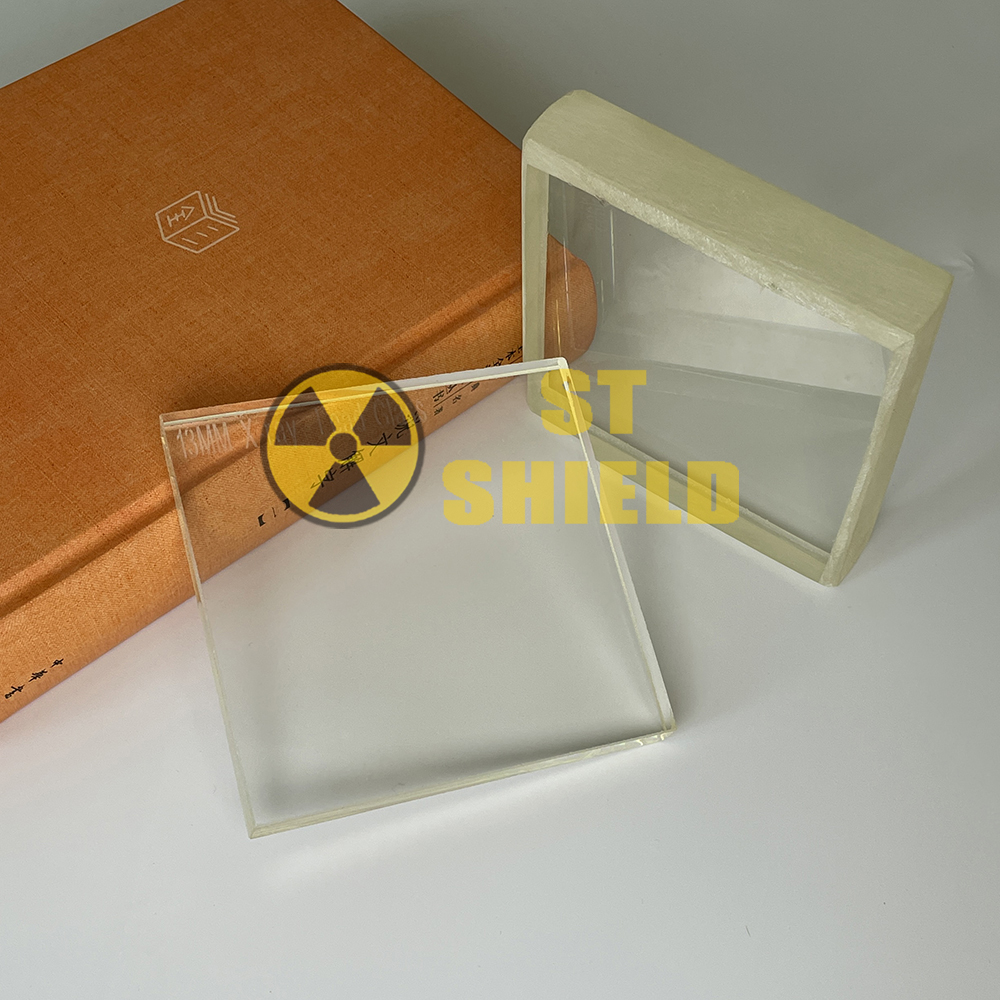
Lead Glass
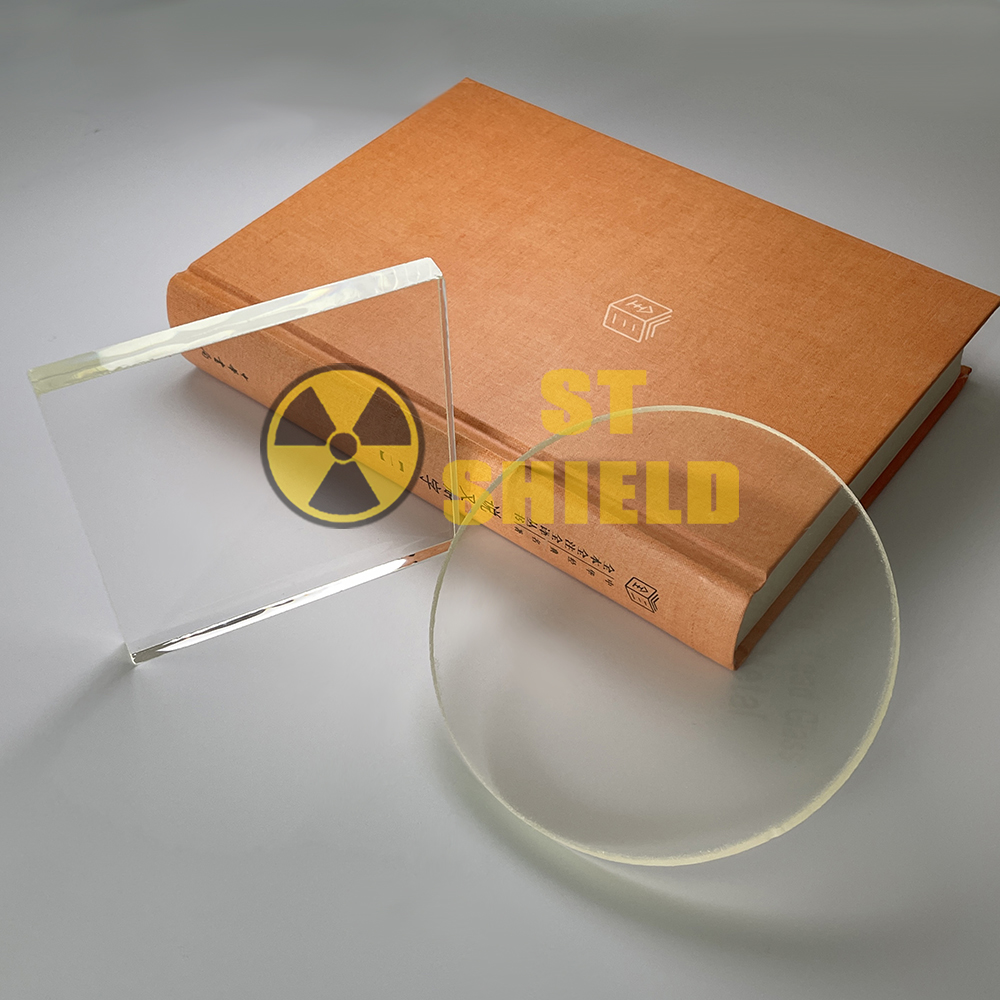
Lead Glass
Comparison of Common Thickness and Lead Equivalent
The lead equivalent (mmPb) of lead glass is the core indicator for measuring its radiation shielding ability, indicating how many millimeters of pure lead plate the thickness of glass is equivalent to in terms of protective effect.
| Recommended Thickness | Lead equivalent (approximately) | Application |
| 10mm | Approx. 2.0 mmPb | Dental X-ray Room |
| 12mm | Approx.2.5mmPb | General X-ray /DR Room |
| 15mm-18mm | Approx.3.0-4.0mmPb | CTRoom |
| 20mm | Approx.4.5mmPb | High-Dose CT / DSARoom |
| 25mm-30mm | Approx.5.0-6.0 mmPb | Nuclear Medicine |
Final glass thickness and lead equivalent should be determined according to the radiation source, equipment output, room layout, distance and local radiation shielding requirements.
Advantage
Why Choose ST Shield Lead Glass?
1. Multiple Thickness Options
10–30mm standard and custom thickness available to match different radiation shielding requirements.
2. Custom Dimensions
Sizes can be tailored precisely according to your project drawings, ensuring a perfect fit for any installation scenario.
3. Irregular Shape Processing
Beyond standard rectangles — circular, perforated, notched, and other non-standard shapes can all be fabricated to specification.
4. Radiation Shielding Testing
Every panel can be verified for lead equivalence and X-ray attenuation performance.
5. Complete Radiation Protection Solutions
Lead glass alone is not enough — as you may already know, lead glass cannot simply be installed into ordinary window frames. That's why we supply not only the glass itself, but also lead-lined frames and a full range of complementary radiation shielding products. From a single panel to a complete turnkey shielding package.

Lead Glass
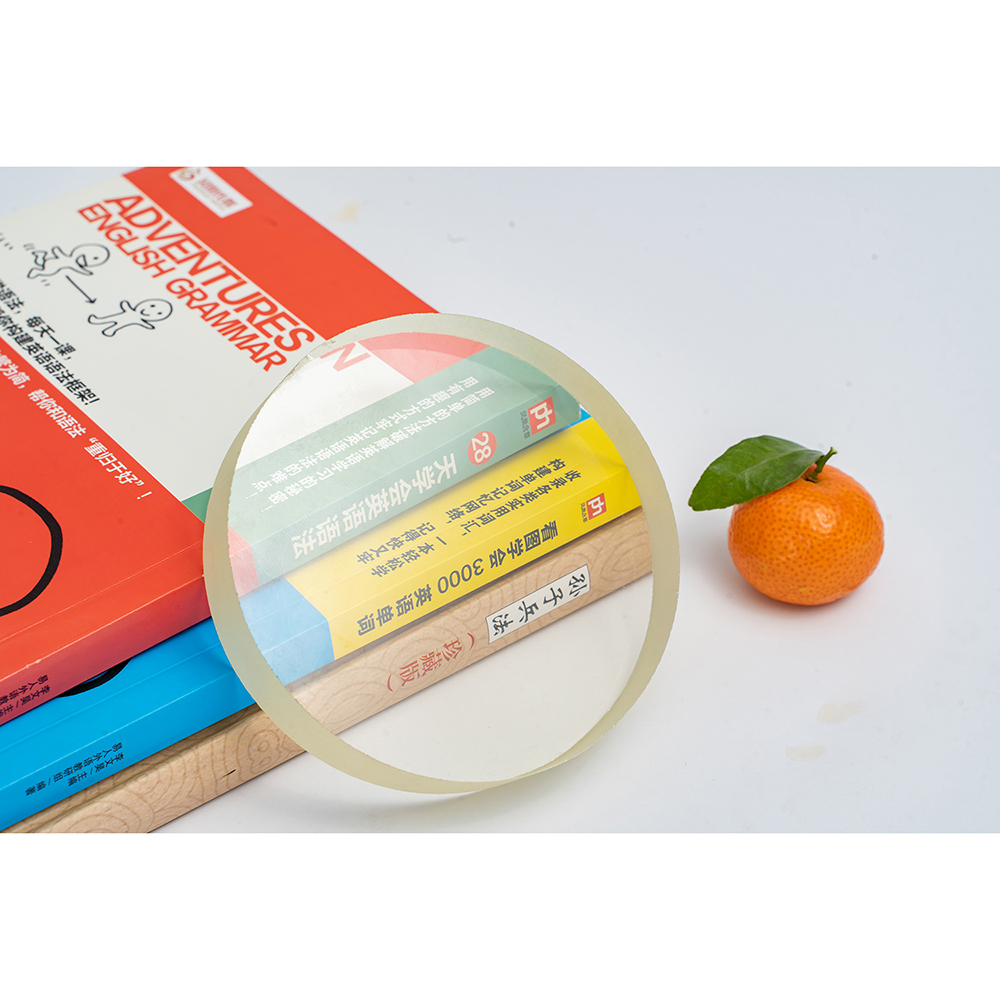
Lead Glass
FAQ
What is the lead equivalent of X-ray protective glass?
Lead equivalent (mm Pb) means "how many millimetres of solid lead sheet give the same X-ray attenuation." For ST Shield lead glass it is not 1:1 with thickness. Under standard diagnostic X-ray conditions (e.g. 100–120 kV):
10 mm ≈ 2.0 mm Pb
15 mm ≈ 3.0 mm Pb
20 mm ≈ 4.0–4.5 mm Pb
25 mm ≈ 5.0 mm Pb
30 mm ≈ 6.0 mm Pb
Exact value depends on glass series (ZF2/ZF3), kV level, and is always stated on the test certificate as e.g. "3.0 mm Pb @ 120 kV".
What thickness of lead glass is suitable for CT rooms?
Most diagnostic CT control-room viewing windows require ≥ 2.0 mm Pb, typically 3.0 mm Pb equivalence. In practice that means:
15 mm ZF3 → ~3.0 mm Pb (standard 16/64-slice CT)
18–20 mm ZF3 → 3.5–4.5 mm Pb (high-workload CT, 128-slice, or close-proximity booth)
The glass lead equivalent must match or exceed the CT room door/wall rating (commonly 2–3 mm Pb walls, 3–4 mm Pb main barrier).
Can lead glass be customized according to the drawings?
Yes. ST Shield processes lead glass from project drawings: custom width/height, 10–30 mm thickness, and irregular shapes — circular vision ports, rectangular with cut corners, drilled holes, notches, or segmented lites for oversized openings.
What size of lead glass can you produce?
Standard flat panels up to 1200 × 2400 mm in one piece (ZF3, 8–20 mm). Above 20 mm thickness or >2400 mm span, we propose laminated/segmented construction or reinforced framing. Small panels (200×300 mm and up) are stock-friendly; mid-size 600×900 / 800×1200 / 1000×2000 are common CT-window formats.
Can you provide lead lined frames for lead glass?
Yes — and this is the important part. Lead glass cannot simply be installed into ordinary window frames; the joint between glass and wall is the most common leak point. ST Shield supplies lead-lined frames (steel or aluminium with continuous sheet-lead lining), matching the glass lead equivalent, plus mounting clips, lead-lined trims and sealing details. This turns the order into:
Lead Glass + Lead-Lined Frame + Radiation Shielding Solution — from one source.
Quality Assurance
Material certification: Provide chemical composition and lead equivalent testing reports for each batch
Optical testing: transmittance, refractive index, bubble/stripe level testing
Shielding Verification: Third Party Institution X-ray Shielding Rate Test Report
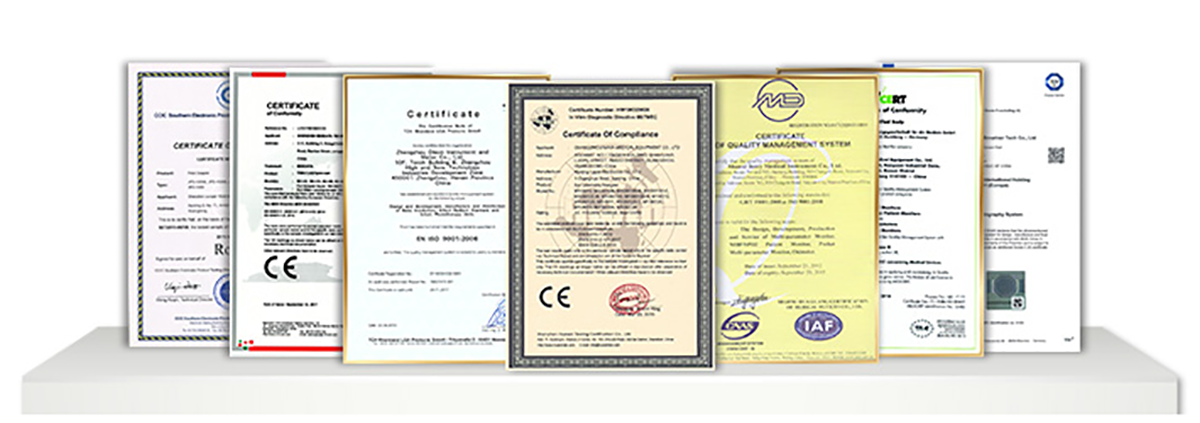
Certification system: CE, ISO, SGS certification (optional)