


| Quantity: | |
|---|---|


ZF2 and ZF3 lead glass are the core series of our medical grade radiation resistant observation window glass, made from high-purity optical grade raw materials through precision melting and double-sided optical polishing. Glass contains a high proportion of lead oxide (PbO), which maintains excellent visible light transmittance while possessing excellent X-ray and gamma ray shielding capabilities. It is a standard protective material for medical imaging departments, industrial flaw detection, and nuclear facility observation windows.

Lead Glass

Lead Glass
ZF2 and ZF3 lead glass are standard configurations for medical radiation protection observation windows. ZF2 excels in high transparency and clarity, while ZF3 excels in high lead equivalent and high protection. Both cannot be tempered and need to be installed with lead frames. When selecting, please match them comprehensively based on radiation energy, space conditions, and visual needs.
| Your needs | Recommended Model | Reason |
|---|---|---|
| Pursuing the highest transmittance and visual clarity | ZF2 | Transmittance of 90%, lower dispersion, and minimal image distortion |
| Higher lead equivalent required for the same thickness | ZF3 | Higher density, lead equivalent 0.24 mmPb/mm, better protection |
| Ordinary X-ray DR、 Dentistry | ZF2 | Best value for money, good transparency |
| CT、 Intervention, high-energy equipment | ZF3 | Higher lead equivalent, meeting high-dose protection requirements |
| Space is limited and needs to be thinned | ZF3 | Under the same lead equivalent, it can be about 10% thinner than ZF2 |
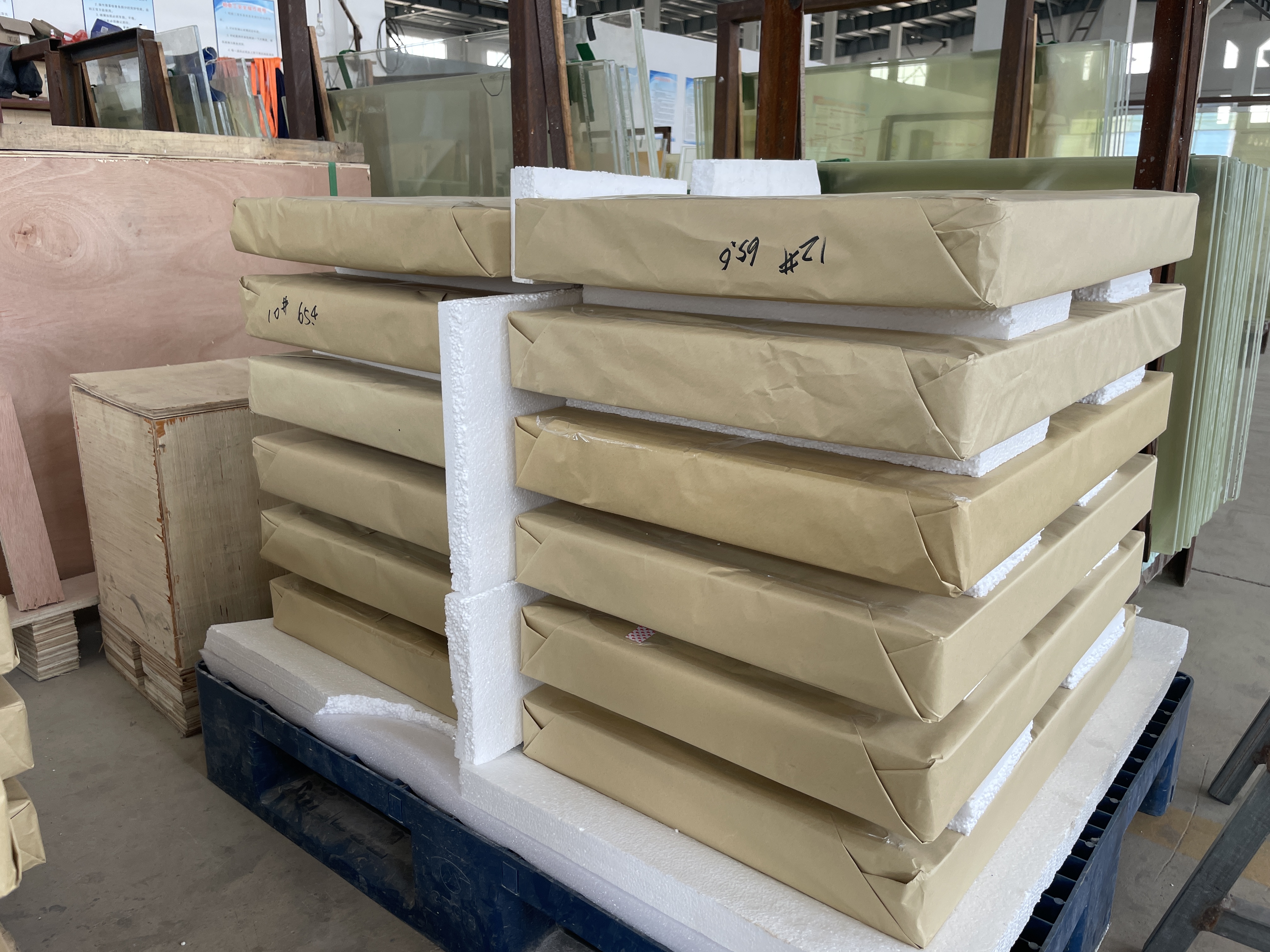
We use standard export packaging, and glass is a fragile item. We ensure the safety of glass at every step. Reaching your hands in the optimal state.
Inner package: single piece covered with PE anti scratch film, surrounded by foam corner protection
Outer package: non fumigation plywood wooden case, built-in 40mm shockproof foam
Transportation mode: road less than truckload/whole vehicle, supporting container sea freight export
Loading and unloading requirements: Forklifts should be placed flat for loading and unloading, and tilting>15 ° is prohibited. The stacking height should be ≤ 2 layers
1. Installation of lead glass frame (lead frame)
Lead glass must be embedded in a dedicated lead frame (lead lined frame), and the lead equivalent of the lead frame should be ≥ that of the glass to prevent radiation leakage from the frame.
2. Fixed method
Fixed with stainless steel pressure strip and buffer gasket, direct screw penetration through glass is prohibited
Place lead rubber or cork pads between the glass and lead frame to prevent stress concentration
Fill the gaps with lead sealant after installation
3. Precautions
Prohibition of strengthening/tempering: Lead glass cannot be tempered, otherwise it will damage the internal structure and cause explosion
Handle with care: Lead glass has low hardness and high brittleness. Gloves should be worn during transportation, and single corner force is prohibited
Avoid temperature difference: The installation environment should avoid severe temperature fluctuations and humid acidic air
Cleaning and maintenance: Use only clean water, neutral detergent, and a soft cloth to wipe
Annual professional inspections are recommended to check for cracks, thinning, or degradation. Monthly visual checks and gentle palpation can detect surface damage (chips, small cracks) between professional audits. High-traffic or high-radiation environments may require semi-annual professional inspections. Damaged glass must be replaced immediately, as even small cracks can allow radiation leakage.
Installation must be performed by trained professionals to avoid stress or damage. The glass should be supported evenly to prevent bending—never rest it on uneven surfaces. Use non-abrasive, corrosion-resistant hardware to secure the glass without applying pressure. Ensure the window frame is level and stable, and seal gaps around the edges with radiation-proof caulk to prevent leakage. Avoid contact with sharp objects during installation or cleaning.


