


| Quantity: | |
|---|---|


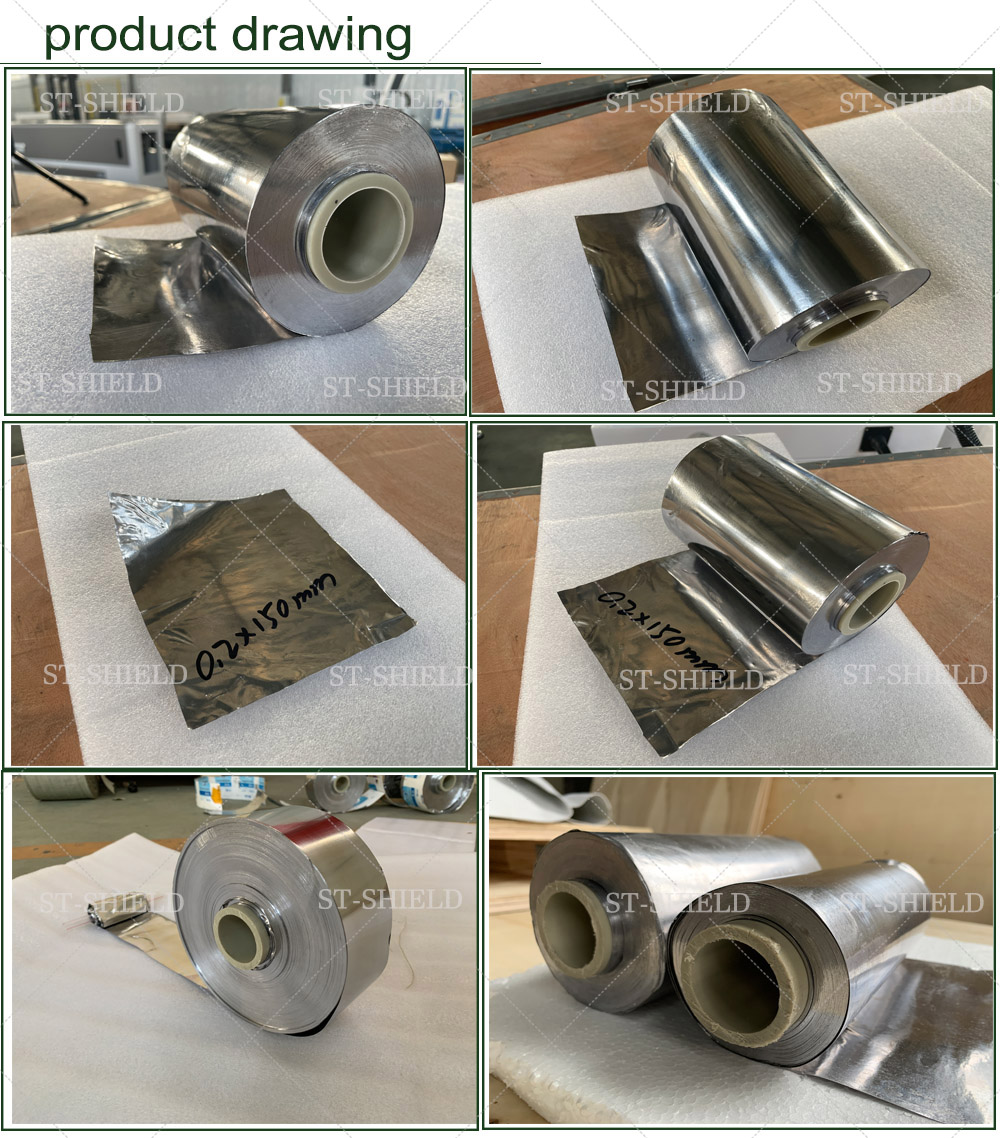
0.28mm lead antimony foil and 0.3mm lead antimony foil, due to their good balance between radiation shielding effectiveness, mechanical strength, and construction convenience, are mainly used as X-ray/radiation protection materials in the medical and industrial fields, followed by corrosion-resistant linings for chemical equipment.
Parameter | Details |
Material | High-purity lead foil ( purity :96% , 97% ,98% ,99% ,99.9% ,99.99% ,99.999% ) Lead SB Foil |
Lead Foil Thickness | 0.015mm , 0.02mm , 0.022mm , 0.025mm , 0.0275mm , 0.03mm , 0.04mm , 0.05mm , 0.1mm , 0.12mm , 0.15mm , 0.18mm , 0.2mm , 0.25mm , 0.28mm,0.3mm |
Density | Approximately 11.34 g/cm ³, providing excellent radiation shielding capability |
Corrosion Resistance | The surface forms a dense protective film, especially with excellent corrosion resistance to sulfuric acid |
Mechanical properties | The addition of antimony improves hardness, strength, and wear resistance, overcoming the disadvantage of pure lead being too soft |
Processing capability | Good ductility, can be rolled into 0.02~0.5mm foil material, easy to cut, curl and fit |
Radiation protection (primary use)
0.28mm and 0.3mm are typical specifications for X-ray shielding lead foil, widely used in:
1. Medical Radiology Department: Protective shielding materials for X-ray rooms, CT rooms, and DR rooms
2. Dental/Pet Hospital: Lead plates for dental X-ray machines and radiation equipment in pet hospitals
3. Nuclear industry: Radiation shielding lining for nuclear facilities and laboratories
4. Industrial flaw detection: radiation protection of non-destructive testing equipment
The high density of lead (11.34 g/cm ³) enables it to effectively absorb X-rays and gamma rays, and the addition of antimony increases its hardness and mechanical strength, making it easier to process into stable protective structures.
Chemical anti-corrosion equipment lining
Antimony containing lead alloys have excellent resistance to sulfuric acid corrosion, and lead foils with a thickness of about 0.3mm are commonly used for:
1. Lining of reaction towers, storage tanks, and pipelines in sulfuric acid production lines
2. Anti corrosion coating for acid pickling tank and electrolytic tank
3. Corrosion resistant lining materials for chemical and metallurgical equipment
4. Roof and building waterproofing and moisture-proof layer
The addition of antimony significantly enhances the hardness and corrosion resistance of lead, ensuring its stability in harsh chemical environments.
Cable sheath and sealing
1.Submarine/underground cables: Lead foil serves as a cable sheath, effectively blocking water vapor and corrosive media erosion, while its plasticity does not affect the winding and movement of the cable
2.Precision equipment sealing: anti light, moisture-proof, and anti gas sealing materials
Other industrial uses
1.Lead acid batteries: Lead antimony alloy is used to manufacture battery plate grids (traditional automotive batteries), and antimony can improve the mechanical strength and creep resistance of the grids
2.Ammunition manufacturing: Lead antimony alloy is used to manufacture bullet heads, pellets, shotgun shells, etc. Antimony increases hardness to ensure ballistic performance
3.Printing movable type: In history, lead antimony tin alloy was used to cast printing fonts, and the "solidification expansion" characteristic of antimony made the handwriting clearer
4.Bearing alloy: Lead based Babbitt alloy (containing antimony, tin, etc.) used for mechanical sliding bearings
What scenarios are 0.28mm and 0.3mm antimony containing lead foils mainly used for?
Medical/industrial radiation protection: shielding materials for X-ray rooms, CT rooms, DR rooms, and dental clinics
Industrial radiographic testing: As a lead foil intensifying screen, it is used for X-ray testing with tube voltage>120kV to improve the clarity of the film
Chemical equipment lining: lining and wrapping of sulfuric acid storage tanks, acid pickling tanks, and electrolytic tanks
Cable sealing sheath: moisture-proof and anti-corrosion protective layer for submarine cables and underground cables
Building waterproofing: roof waterproofing, moisture-proof layer
What are the advantages of antimony containing lead foil compared to pure lead foil?
Higher hardness: Pure lead is softer and more prone to deformation; After adding antimony, the hardness significantly increases, making it less prone to scratches and creep
Better strength: increased fatigue resistance by about 40%, suitable for long-term stress or repeated bending scenarios
Corrosion resistance maintenance: still has excellent resistance to sulfuric acid and atmospheric corrosion
Processing improvement: Good melt flowability, easy to cast and roll into shape
How to store antimony containing lead foil?
Roll storage: superior to folding storage, can avoid creases and cracks
Environmental requirements: cool, dry, ventilated, avoid contact with acidic and alkaline substances
Protective measures: The surface can be covered with a film for protection, preventing oxidation and mechanical damage
Temperature Attention: Lead has a low melting point (about 327 ℃), keep away from high-temperature sources of ignition


