




| Quantity: | |
|---|---|


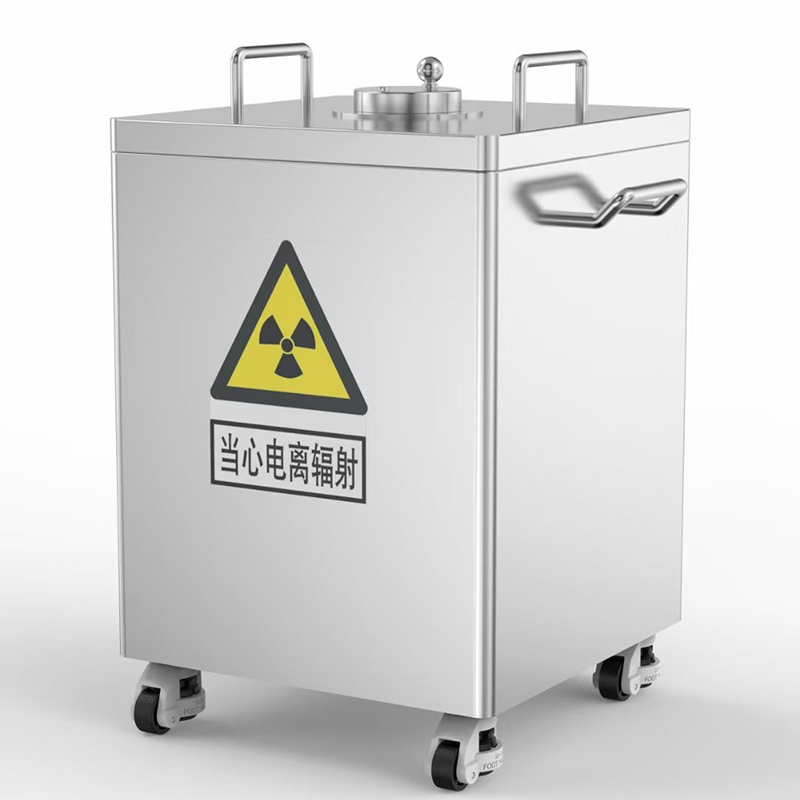
Mainly used in hospitals, nuclear medicine, nuclear power plants and other places. Safe transportation of radioactive isotopes between medical institutions, a thick shielded container made of lead used for transporting or storing radioactive isotopes or other radioactive substances, and protective measures for laboratory operations of radioactive substances.

Feature | Details |
Lead Equivalent | 1mmpb–50mmpb (customizable for specific isotopes) |
Size | Fully customizable (cylindrical, rectangular, or specialized shapes) |
Shielded Substances | Californium, radium (226 Ra), uranium (235 U), cobalt (60 Co), iodine (131 I), cesium (137 Cs), etc. |
Core Materials | 99.994% pure lead lining + stainless steel (long-term storage models) or durable plastic outer casing |
Safety Features | Secure sealable lid, leak-proof design, clear radioactive labeling, waste segregation compartments |
Storage Compatibility | Suitable for short-term (temporary transport) and long-term (isotope decay) storage |
Durability | Impact-resistant, corrosion-resistant, and designed for repeated use |
Application fields of medical lead cans
1. Lead Tank in radiation therapy:
During radiation therapy, medical lead cans are used as containers for radioactive sources to load and protect them, in order to prevent radiation leakage from causing harm to medical staff and patients
2. Lead Tank in nuclear medicine:
Nuclear medicine is a technology that uses radioactive isotopes for diagnosis and treatment. Medical lead cans are used as storage and transport containers for isotopes to ensure their safety and protective performance.
3. LeadTank in radiological diagnosis:
Radiological diagnosis includes X-rays CT、 Medical lead cans using imaging techniques such as magnetic resonance imaging can be used to protect sensitive areas of patients and reduce the radiation dose they receive.
4. Lead Tank can also be used in conjunction with mobile transport vehicles to store medical waste, reducing the radiation damage caused by medical waste to healthcare workers and patients.
What safety features should a lead Tank for medical radioactive waste include?
A lead Tank for medical radioactive waste must be durable, compatible with the waste, properly labeled, sealable, and capable of holding its contents securely to prevent spills or leakage. It should provide adequate lead shielding to contain radiation, particularly for gamma emitters, and allow for the segregation of different radioactive materials based on their isotope or half-life.
Key Safety Features:
1.Shielding:
The primary purpose of a lead container is to provide adequate shielding to protect personnel and the environment from radiation exposure.
2.Durability:
The container must be made of a durable material that can withstand normal handling and prevent breakage.
3.Compatibility:
The container's material should be compatible with the hazardous waste stored within it, preventing chemical reactions or degradation.
4.Leak Prevention:
The container must have a secure, sealable lid to prevent accidental spills and to keep other substances out.
5.Capacity:
It should be able to hold the waste securely, minimizing the risk of spillage.
6.Proper Labeling:
Containers must be clearly labeled with the appropriate radioactive symbols and isotope information.
7.Waste Segregation:
Lead Tank should be used to separate waste based on the specific radioisotope or half-life, preventing mixing of different types of waste.
Can lead containers be used for both short-term and long-term storage of radioactive isotopes?
Yes, lead containers can be used for both short-term and long-term storage of radioactive isotopes, with the suitability depending on the isotope's radiation type and energy, as well as the required level of protection. Lead is effective at shielding against gamma rays and X-rays, and its thickness and the overall design of the container must be tailored to the specific isotope to ensure radiation is sufficiently contained for safe storage and transport.
Factors to Consider
1.Isotope characteristics: Lead is most effective against gamma and X-ray radiation. Its effectiveness against other forms of radiation, like beta particles, depends on the isotope's specific energy levels.
2.Radiation energy: High-energy radiation requires thicker or denser lead shielding.
3.Duration of storage: For long-term storage, containers often feature a stainless steel housing for added strength and security, and may be equipped with locks.
Examples of Lead Containers
1.Short-term:
Lead vial pigs and mobile lead containers are used for temporary storage and transport.
2.Long-term:
Lead containers with stainless steel housings and locks are designed for longer-term storage or for radioisotope decay. Lead decay cabinets and lead-lined safes also provide suitable long-term storage solutions.
Importance of Design
1.The thickness of the lead in a container is critical, with designs like the FNR (Fast Neutron Reactor) fuel bundles requiring significant lead thickness.
2.Containers should be designed to provide uniform surface exposure rates, complying with international safety standards for safe handling.


