




| Quantity: | |
|---|---|


Lead screens are mainly used to isolate ionizing radiation, protect personnel and equipment safety, and their core function is to absorb or block radiation through high atomic number materials (such as lead).

Feature | Details |
Lead Equivalent | 1mmpb - 12mmpb (customizable for specific isotopes) |
Size | We can customize the product size and protection equivalent according to your needs. |
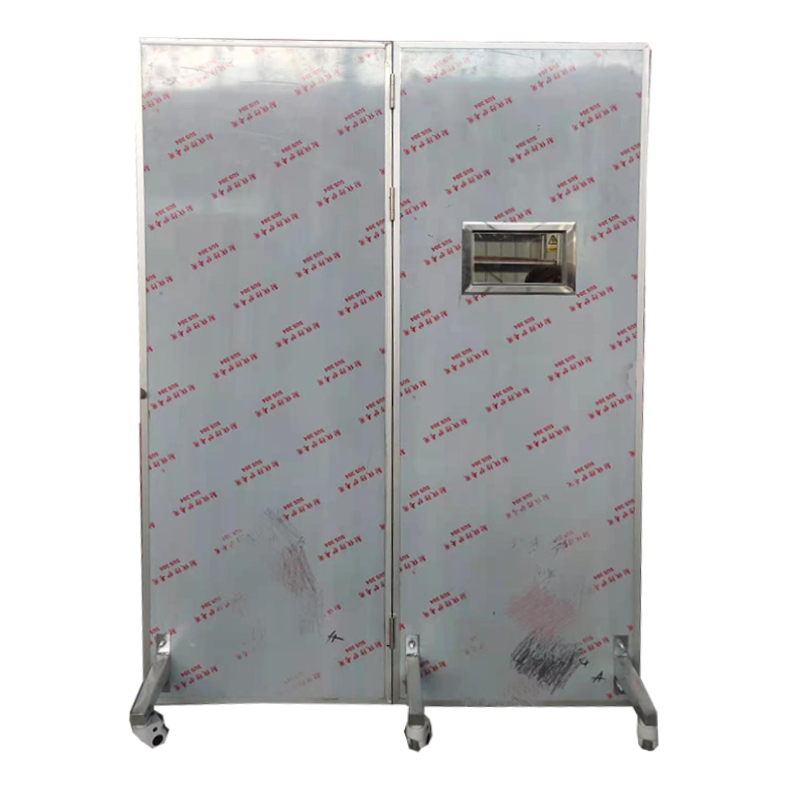
Product type | Single lead screen, Double lead screen, Multi lead screen Can choose lead screen size, as well as optional window size with window |
Product type | The product is equipped with fixed universal wheels for greater stability |
Durability | Impact-resistant, corrosion-resistant |
Lead screen function
1. Lead screens absorb harmful radiation such as X-rays and alpha rays through lead containing materials such as lead plates, reducing exposure risks to medical staff, patients, and the surrounding environment.
2. Lead screens are commonly used in nuclear engineering and medical fields to construct protective walls using 50mm or 100mm thick lead shielding components, with the specific thickness dynamically adjusted according to radiation intensity.
3. Lead screens are mainly used in medical settings such as interventional departments, radiation therapy rooms, nuclear medicine laboratories, as well as industrial fields that require radiation protection.
4. The lead screen can be selected as windowless lead shielding or windowed lead shielding, which is more convenient for medical staff to observe.
Does lead screen wind energy prevent radiation?
Lead screen wind energy effectively protects against radiation, and its protection effect depends on lead equivalent, structural design, and usage scenarios. It can usually block more than 90% of radiation, but attention should be paid to the residual effects of scattered radiation.
Precautions in practical applications
1.Residual risk of scattered radiation:
Even if the lead screen blocks direct radiation, secondary radiation scattered by the patient or surrounding objects may still exist in small amounts, and other protective measures (such as lead clothing and distance control) need to be taken in conjunction.
2.Lead equivalent and scene adaptation:
The tube voltage/current of different devices (such as interventional surgery C-arm machines) need to be matched with the corresponding lead equivalent screen, and the requirements for industrial and medical scenarios may be different.
3.Structural design optimization:
Modern lead screens adopt folding, suspended and other designs to enhance mobility and protective area coverage.


