Views: 0 Author: Site Editor Publish Time: 2026-05-15 Origin: Site


Nuclear medicine departments and radiopharmacies face a critical operational challenge every day. They must relentlessly balance ALARA radiation protection principles against severe spatial constraints. You rarely find excess square footage inside clinical hot labs. High-energy isotopes require uncompromising safety protocols and secure storage. A PET Unit Dose Cabinet acts as the ultimate all-in-one workstation. It manages high-energy isotope preparation, heavily shielded storage, and controlled decay zones. It condenses these vital functions into a single vertical footprint. Choosing the right setup goes beyond merely checking lead thickness. You must match physical dimensions, shielding integrity, and functional layout to your specific clinical workflow. This guide explores optimal deployment scenarios, critical evaluation criteria, and practical deployment realities you need to know.
Core Locations: Essential for PET/SPECT hot labs, clinical nuclear medicine departments, and commercial radiopharmacies managing high-energy isotopes.
Workflow Integration: Modern cabinets compartmentalize workflows—separating daily syringe drops, sharps decay rotation, and heavy phantom storage.
Form Factor Choice: Enclosed cabinets offer maximum security and modularity, while open-bottom tables facilitate easier transfer of heavy transport pigs.
Deployment Realities: These units weigh upwards of 1,200 to 1,500+ lbs; procurement must account for LTL palletized delivery, floor load capacities, and pre-assembled vs. site-assembled requirements.
Cost Spectrum: Baseline 0.25" lead models start around $12,000, while heavily shielded 1" lead models for PET can exceed $42,000.
Clinical settings demand precision and uncompromising safety. Technicians rely on specialized furniture to handle high-energy isotopes safely. You will typically find these heavy units deployed across three main environments.
First, PET and SPECT hot labs rely on them as primary preparation zones. Technicians require integrated dose calibrators and heavily shielded L-Blocks here. These critical elements must exist within a single continuous footprint to maximize efficiency. Second, commercial radiopharmacies deploy them for high-throughput daily operations. These busy facilities prepare single-dose ammo boxes constantly. They utilize localized shielding to protect adjacent compounding workstations from ambient radiation exposure. Third, hospital nuclear medicine departments deploy them to navigate tight facility layouts. The shielded preparation surface, active isotope storage, and sharps disposal must occupy the exact same vertical space.
When should you procure a new unit? Several specific scenario triggers drive this procurement decision:
Upgrading from legacy unshielded benches to meet modern ALARA safety compliance.
Transitioning your facility to handle higher-energy PET isotopes like F-18.
Standardizing laboratory furniture to meet increasingly stringent surface decontamination protocols.
Matching your facility profile to these scenarios ensures a smart, future-proof investment.
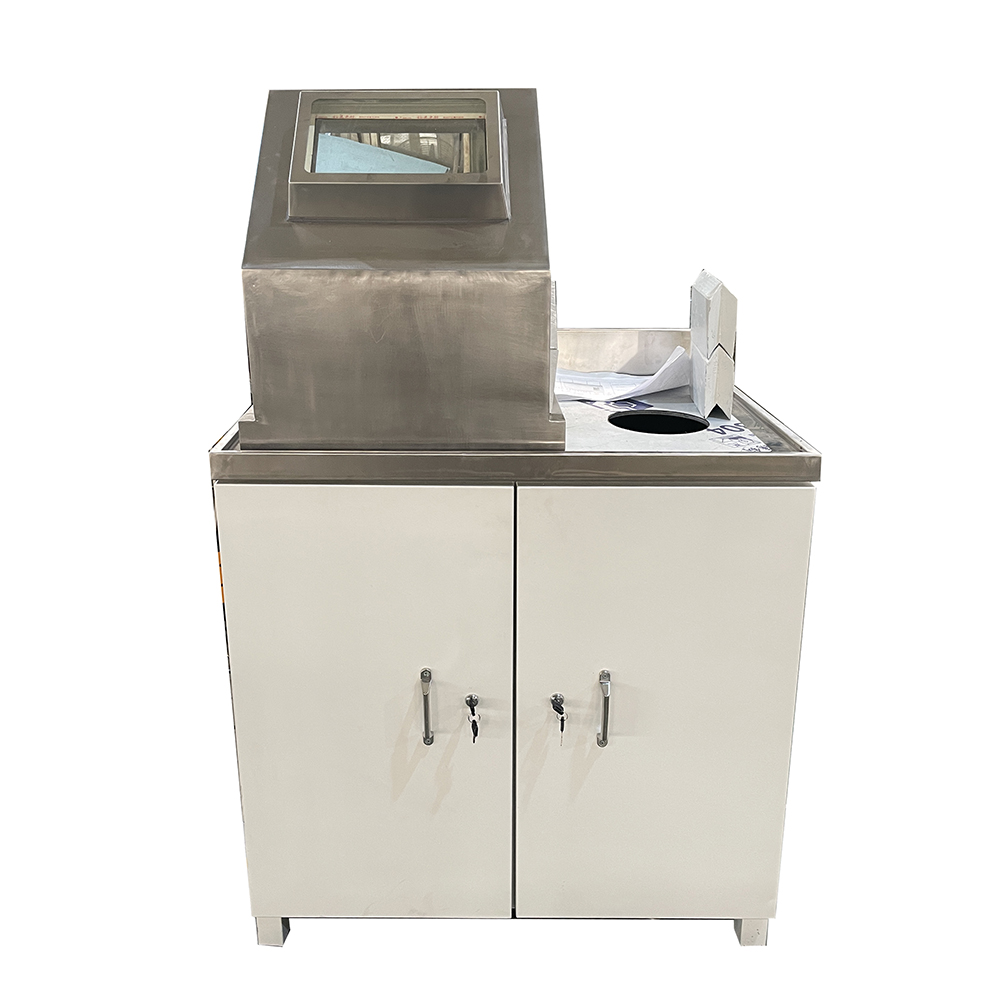
Modern designs move beyond simple storage boxes. They deliberately compartmentalize workflows to enhance technician safety and operational speed. You can easily map out specific physical zones for different lab tasks.
This zone handles active sharps container decay rotation. It typically features a front drop-slot. Technicians use this specific slot for rapid daily syringe disposal. A heavily shielded rear port allows the safe removal of decayed waste later.
High-volume storage requires maximum physical security. This section features secured compartments specifically designed for single-dose ammo boxes. Strict lock-and-key mechanisms prevent unauthorized inventory access and keep sensitive materials isolated.
Technicians open these middle drawers dozens of times daily. They hold medium-weight items essential for ongoing workflows. Typical contents include syringe pigs, localized calibration sources, and daily use isotopes. Smooth-gliding heavy-duty tracks ensure ergonomic, strain-free access.
Manufacturers strictly reserve the bottom section for high-mass items. Flood sources and bulky quality control phantoms go here. Keeping exceptionally heavy items near the floor maintains a safe, low center of gravity. This vital engineering choice prevents dangerous tipping hazards in busy hot labs.
Facility planners must choose between two distinct structural designs. Each design serves completely different operational styles and internal transport mechanisms.
An enclosed cabinet features full-surround interlocking doors. It uses highly compartmentalized heavy-duty drawers to organize materials. High-traffic labs benefit immensely from this design. It provides strict lock-and-key security for all active inventory. Furthermore, it supports modular "shells and inserts" customization. You can quickly swap internal modules as your facility needs evolve.
A unit dose table takes a noticeably different approach. It features a fully shielded upper preparation area. However, it incorporates an open, high-clearance bottom shelf instead of enclosed drawers. This open design specifically aids facilities relying on heavy transport containers. Technicians can smoothly slide heavy pigs directly off a transport cart onto the shelf. They do not have to negotiate tight drawer clearances or lift heavy items manually.
We summarize the core operational differences in this comparison chart:
Evaluation Feature | Enclosed Cabinet | Unit Dose Table |
|---|---|---|
Physical Security | Full lock-and-key compartments | Secured top section, open bottom |
Storage Style | Compartmentalized pull-out drawers | High-clearance open shelving |
Ergonomics | Segmented vertical organization | Easy cart-to-shelf sliding transfer |
Selecting the ideal PET Unit Dose Cabinet or table depends heavily on your daily receiving protocols. Analyze how your radiopharmacy delivers heavy isotopes before finalizing your layout.
Procuring radiation shielding requires deep technical scrutiny. You must evaluate structural integrity and radiological parameters carefully before signing purchase orders.
First, scrutinize the overall shielding integrity. Look closely for overlapping lead shielding at all corners and doors. This specific manufacturing technique actively eliminates dangerous radiation leak paths. Standard thickness options vary based on the exact isotope energy profile you use.
Lead Thickness | Typical Application Profile |
|---|---|
0.25 Inches | Suits standard low-energy clinical applications. |
0.50 Inches | Handles medium-energy isotopes effectively. |
1.00 Inch | Provides necessary protection for high-energy PET work. |
Second, demand superior surface materials. Insist on AISI 304 stainless steel. The primary work surface must feature raised, spill-proof edges. A compliant setup generally includes a 0.5-inch lip and a 4-inch backsplash. Some modern designs offer seamless medical-grade solid surfaces. These smart choices dramatically simplify your daily decontamination protocols.
Third, verify ergonomics and modularity. An industry-standard height sits exactly around 36.5 inches. This supports comfortable standing work for technicians. Evaluate advanced features like flush-mounted dose calibrator chambers. Flush mounting maximizes your usable countertop space. It prevents the bulky calibrator from dominating the primary work zone.
Finally, calculate the structural load capacity. The steel frame must confidently support massive specialized accessories. A fully loaded setup easily demands a structural capacity exceeding 1,500 lbs. This accounts for an integrated compact L-Block containing high-density (5.2 g/cm³) lead glass. Installing a robust PET Unit Dose Cabinet requires planning for extreme localized floor loads.
Best Practice: Never assume standard hospital floors can support these intense weights safely. Always consult your facility structural engineer before placement.
Getting the equipment safely to your hot lab presents significant logistical challenges. These massive units demand careful multi-departmental coordination.
Expect massive shipping weights upon arrival. These units strictly require LTL (Less Than Truckload) palletized delivery. Procurement teams must verify loading dock capabilities early. Measure the entire path-to-lab dimensions meticulously. Doorways, service elevators, and narrow corridors must smoothly accommodate the full pallet width.
Many units ship "factory pre-assembled". This greatly helps, requiring only a standard hydraulic pallet jack for initial placement. However, specific heavy components demand extra lifting power. A 175-lb sharps shield often requires a heavy-duty forklift. Installers use 1/4-20 eyebolts for safe and precise alignment. You absolutely cannot manually lift these components safely.
Installation does not end at mere placement. Technicians should apply professional silicone sealant completely around mounted accessories. This vital step proactively prevents radioactive contamination from seeping into microscopic seams. It ensures long-term hygiene and strict regulatory compliance.
Standard hospital cleaning protocols strictly prohibit abrasive chemicals here. Harsh industrial cleaners easily destroy protective finishes. Staff should maintain surfaces using warm water and neutral detergents only. Industry-standard decontaminants like Radiacwash work best. Proper maintenance significantly extends the functional lifespan of the shielding materials.
Procurement budgets vary wildly based directly on your shielding requirements. Understanding these market disparities helps you plan accurately.
Base pricing disparities correlate directly to lead volume. A standard 0.25-inch lead-lined model for lower-energy isotopes typically falls in the $12,000 to $15,000 range. This represents a normal entry point for basic clinical hot labs.
However, entering the high-energy PET space requires a significant premium. Upgrading to a 1-inch lead thickness drastically increases raw material costs. Shipping weights double or sometimes triple. Consequently, the MSRP pushes aggressively into the $40,000 to $45,000+ bracket. The massive extra lead weight directly translates to massive price jumps.
Budgeting must also account for hidden cost factors. Do not look only at the base model sticker price. Specialized heavy freight adds thousands to the final invoice. Optional L-Block attachments naturally increase the budget further. You may also need custom interlocking lead brick caves. Facility compliance modifications, like critical floor reinforcements, demand their own separate funding. Map out these peripheral costs early to avoid surprises.
Selecting the ideal heavily shielded workstation requires expertly balancing three crucial factors. You must perfectly align operational flow through smart compartment mapping. You must absolutely guarantee technician safety via overlapped lead shielding. Finally, you must respect facility physics regarding floor load limits and doorway dimensions. Taking risky shortcuts on any of these factors invites regulatory failure.
To move forward effectively, follow these actionable next steps. First, comprehensively audit your hot lab's current physical footprint. Second, confirm the exact required lead thickness directly with your facility Radiation Safety Officer (RSO). Third, physically walk the delivery pathway. Ensure every single corridor and elevator can handle a pre-assembled, 1,200+ lb payload safely. Proactive planning guarantees a seamless and compliant deployment.
A: For PET isotopes (like F-18), a 1" (2.54 cm) lead thickness is standard to effectively attenuate 511 keV gamma rays. SPECT or low-energy setups may only require 0.25" or 0.5" thickness.
A: Yes, if handled correctly. Due to the extreme weight (often 1,200 to over 1,500 lbs), they must be moved using heavy-duty hydraulic pallet jacks. They cannot be manually lifted safely under any circumstances.
A: A cabinet primarily provides lower-body shielding, structural support for heavy L-Blocks, and secure decay storage. A fume hood provides targeted airborne contamination control and ventilation, often placed directly above shielded casework.
A: Yes, beyond standard ALARA guidelines, they must meet general healthcare furniture regulations. In the US, manufacturers typically provide Latex-Free documentation and standard Prop 65 material warnings regarding lead and coating chemicals.