


| Quantity: | |
|---|---|


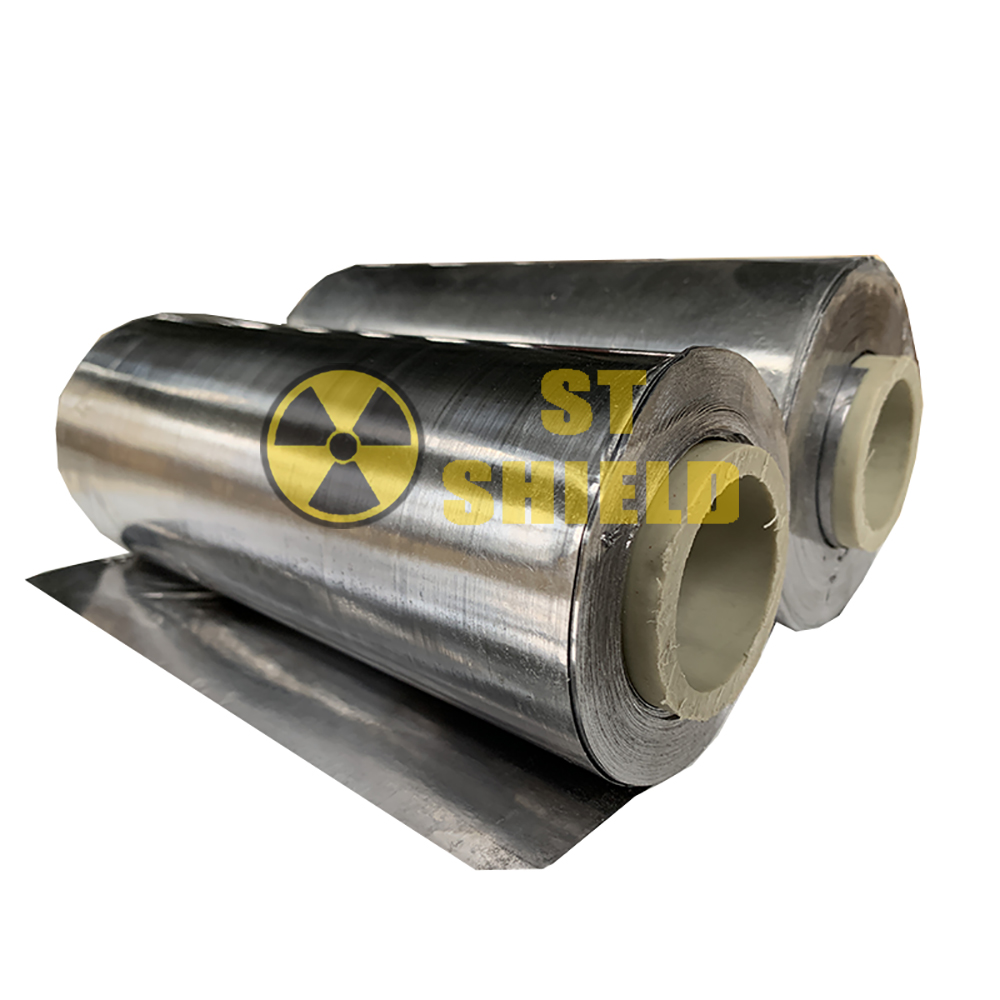
Lead Foil is a high-quality shielding material made of pure lead ingots with a purity of over 99.994%. It boasts unique physical properties: low melting point, good corrosion resistance, high specific gravity, and strong impermeability to X-rays and gamma rays. Available in a wide thickness range from 0.02mm to 0.3mm, it offers flexible options for different application scenarios. With excellent processing performance and high plasticity, it can be made into smooth or suede surfaces, adapting to diverse processing needs. It is widely used in medical protection, industrial corrosion prevention, decorative crafts, and electronic cable fields, serving as a critical material for radiation shielding and functional applications.
Technical Specifications
Parameter | Details |
Material | High-purity lead foil ( purity :96% , 97% ,98% ,99% ,99.9% ,99.99% ,99.999% ) |
Thickness Options | 0.02mm , 0.025mm , 0.0275mm , 0.03mm , 0.04mm , 0.05mm , 0.1mm , 0.12mm , 0.15mm , 0.18mm , 0.2mm , 0.25mm , 0.3mm |
Specific Gravity | 11.345 g/cm³ |
Processing Performance | High plasticity, easy to cut, bend, and shape |
Biocompatibility | Suitable for medical contact applications |
Corrosion Resistance | Resistant to acids, alkalis, and moisture |
Radiation Shielding | Effective against X-rays and gamma rays |
Application Temperature | Adaptable to normal working temperatures (avoid extreme high temperatures) |
With its high specific gravity and atomic number, Lead Foil effectively blocks X-rays and gamma rays, providing reliable radiation protection in medical and industrial environments. The high-purity lead material ensures consistent shielding effectiveness, without gaps or weak points.
Available in 13 different thicknesses from 0.02mm to 0.3mm, it can be tailored to diverse needs. Thin foils (<0.1mm) are suitable for electronic cables and lightweight protective products, while thick foils (≥0.1mm) excel in industrial radiation shielding and corrosion prevention. Its high plasticity allows for customization into various shapes and sizes.
Beyond radiation protection, it offers corrosion resistance, moisture resistance, and decorative functions, making it suitable for medical, industrial, craft, and electronic fields. Its long service life and low maintenance costs ensure high cost-effectiveness, while its easy processing reduces production and installation expenses.
Used for experimental testing of metals
1.Bullion for gold finess determination by fire assay
2.Lead foil for geochemistry laboratory test work
It is a key material for medical protective clothing, surgical drapes, and medical equipment shielding. Its biocompatibility ensures safety for direct contact with the human body, while its radiation shielding function protects medical staff during X-ray examinations and radiation therapy. It is also used in testing equipment and healthcare products requiring radiation isolation.
Anti-corrosion lead foil is applied in seawater desalination equipment, petrochemical pipelines, and chemical reaction vessels, withstanding harsh corrosive environments. Thick lead foil (≥0.1mm) serves as radiation shielding material in nuclear power plants, industrial radiation sources, and radiation testing facilities, preventing radiation leakage.
With high plasticity, it can be made into smooth or suede surfaces, used for architectural decoration (such as ceiling panels and wall inlays), home decoration, and handicraft production. Its metallic luster and unique texture enhance the aesthetic appeal of products, suitable for high-end decoration and craft design.
Thin lead foil (<0.1mm) is used as cable sheath material, providing moisture and corrosion protection for cables. It is also applied in the electronics industry for shielding electromagnetic interference and enhancing conductivity, such as in welding accessories and electronic component packaging.
Direct skin contact should be avoided during handling; gloves must be worn. After operation, hands should be thoroughly washed with soap and water. Dust or smoke generation (e.g., during cutting or heating) should be prevented to avoid inhalation. For large-scale processing, proper ventilation equipment is recommended.
Abandoned lead foil is classified as hazardous waste and cannot be discarded arbitrarily. It must be collected separately and recycled according to local environmental regulations. Our company provides guidance on proper disposal methods to ensure compliance with environmental standards and avoid environmental pollution.
Thin lead foil (thickness <0.1mm) is lightweight and flexible, suitable for cable sheaths, electronic component shielding, and lightweight medical protective products. Thick lead foil (thickness ≥0.1mm) has stronger radiation shielding and corrosion resistance, ideal for industrial radiation shielding, chemical equipment lining, and heavy-duty protective applications. The choice depends on specific usage requirements.


