

Views: 0 Author: Site Editor Publish Time: 2026-05-29 Origin: Site


Standard off-the-shelf shielding often falls short for specialized medical, industrial, or nuclear applications. You handle unique isotopes, automated production lines, or strict facility footprint constraints daily. Under these precise conditions, custom engineering becomes a strict compliance necessity rather than a mere luxury.
Misaligned shielding leads directly to safety vulnerabilities and serious regulatory failures. You might compromise facility structural integrity due to severe floor weight overloads. Poorly sized shielding also creates incredibly inefficient daily handling protocols for your technicians.
We provide a highly detailed technical roadmap for procurement and engineering teams. You will learn exactly how to evaluate custom shielding setups effectively. We detail specific material options, modern manufacturing processes, and essential compliance requirements. Protecting your staff requires uncompromising accuracy. Understanding your exact customization options ensures you maintain safe, compliant, and highly functional operations.
Complete Dimensional Control: Lead containers can be custom-cast to precise dimensions, wall thicknesses (from 1/32" to multi-inch), and geometric shapes (e.g., square profiles for automated lines).
Composite Shielding Options: Customization allows for dual-shielding integration, such as combining 99.94% pure lead with boron-filled polyethylene for simultaneous gamma and neutron attenuation.
Integration & Hardware: Custom units can incorporate application-specific features like cable cutouts, hydraulic lift mechanisms, and tamper-proof locks for transport.
End-to-End Validation: High-quality custom builds include mandatory structural integrity checks, dimensional verification, and non-destructive gamma testing prior to deployment.
Facilities often outgrow generalized safety equipment. When you purchase standard Lead Containers, you often compromise on ergonomics, space, or exact radiation attenuation. Customization solves several inherent operational bottlenecks.
Standard heavy-duty containers often exceed local floor or countertop load-bearing capacities. Many medical laboratories and older industrial facilities restrict point loads strictly. If you install a generic dense container, you risk structural damage. Custom engineering allows for optimized weight distribution. Engineers modify the base footprint to spread heavy loads across a wider surface area safely.
Modern manufacturing demands speed. Traditional round containers rarely fit smoothly into modern pharmaceutical or automated manufacturing lines. Conveyor belts and robotic arms require predictable, flat grasping surfaces. Custom square plastic components and engineered molds ensure seamless robotic handling compatibility. These tailored geometries support Just-In-Time (JIT) inventory systems perfectly. They prevent jams and keep your production lines moving efficiently.
Radiation profiles vary wildly. Standard shielding may be over-engineered for low-energy isotopes. This wastes your budget on unnecessary materials and shipping weights. Conversely, standard models might be heavily under-engineered for high-energy emitters. This directly fails stringent safety audits and endangers personnel. Customization matches exact attenuation requirements precisely. You pay only for the exact shielding thickness your specific isotope demands.
Buyers must understand the underlying material science. You can specify exact physical properties to guarantee maximum safety and durability.
Custom pours typically utilize 99.94% pure lead. This purity level remains fully compliant with strict ASTM B-29 industry standards. High purity prevents internal inconsistencies. Wall thicknesses are fully adjustable based on your required half-value layers (HVL). You determine the exact thickness needed to reduce surface dose rates to safe, compliant levels.
Raw lead poses a toxicity hazard if handled directly. Therefore, manufacturers must fully encapsulate the lead core to prevent human exposure. Heavy-duty options include A36 or 44W carbon steel for industrial environments. For highly sterile clinical environments, manufacturers utilize premium stainless steel. A properly engineered Radioactive Material Medical Waste Storage Lead Tank heavily relies on easy-to-clean stainless steel housings to maintain absolute sterility.
Some industrial applications involve both gamma and neutron radiation simultaneously. Standard lead stops gamma rays but allows neutrons to pass. Custom units solve this dual threat easily. Engineers design multi-layered composite walls. They line the dense lead core using specialized boron-filled polyethylene. This combination provides simultaneous gamma and neutron attenuation in one sleek package.
Ergonomics heavily influence daily safety protocols. Heavy lids cause severe strain injuries. Custom units include application-specific hardware to protect your technicians. Typical integration features include:
Heavy-duty load-bearing hinges for repeated daily access.
Hydraulic lift-assist mechanisms for safely opening multi-hundred-pound lids.
Locking castors for secure, controlled mobility across laboratory floors.
Specialized surface treatments, including smooth epoxy coatings for rapid chemical decontamination.
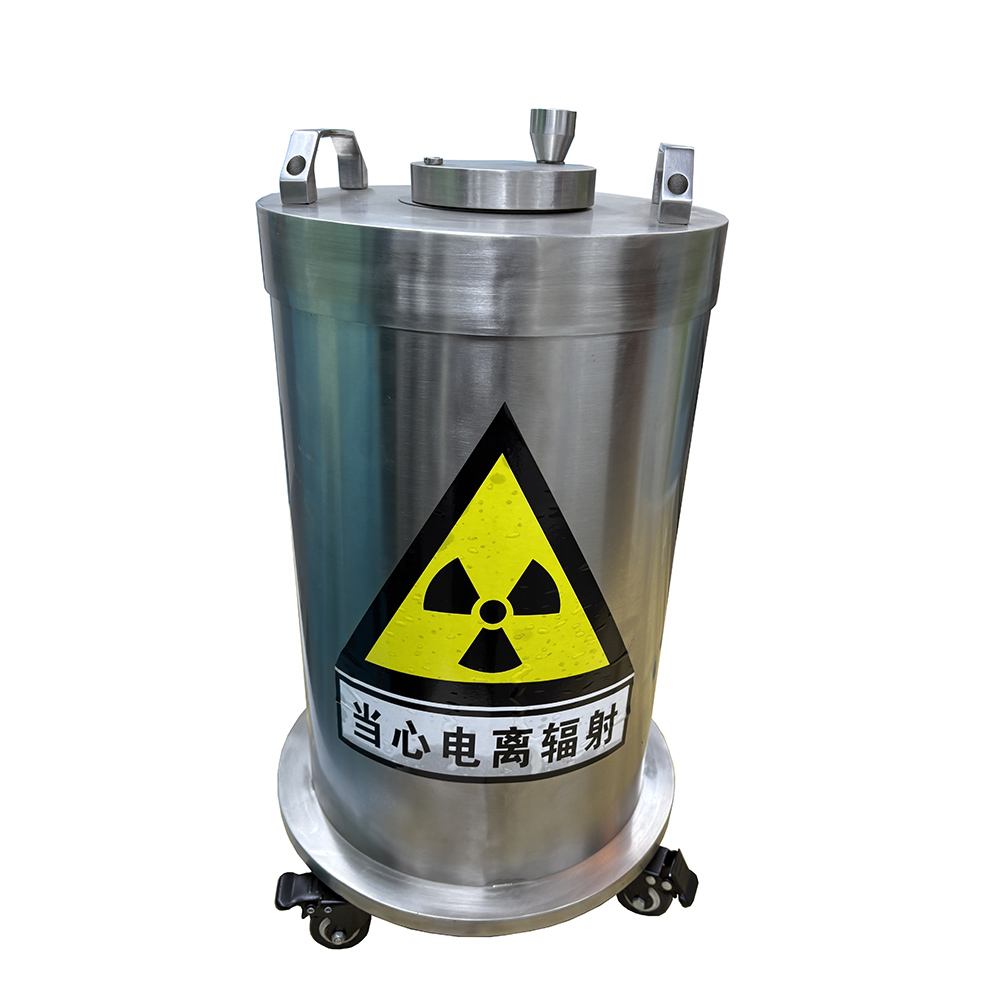
Transforming a concept into a certified safety device requires exceptional precision. Top-tier manufacturers follow a rigorous end-to-end production reality. We outline the crucial phases below.
CAD Design and Mold Fabrication: Engineers convert your facility requirements into highly precise blueprints. They calculate exact internal dimensions based on your necessary lead thickness and external spatial constraints. They then fabricate exact molds for the casting phase.
Large-Scale Pour Capabilities: Specialized foundries handle continuous custom lead pours. These range from standard desktop weights up to massive 100,000 lbs structures for heavy industrial applications. Continuous pouring ensures solid, void-free shielding. It prevents dangerous cold joints inside the walls.
Precision Machining and Assembly: Post-pour processing refines the raw block. Technicians conduct smooth edge routing, precise welding, and complex laminating. They apply specific architectural finishes or durable industrial paint to the exterior housing.
Quality Assurance (QA) and Gamma Testing: This final step validates structural and shielding integrity. Custom units must pass intensive non-destructive gamma scans. Technicians sweep the container walls using active radiation sources. This guarantees absolutely zero radiation leakage points or hidden pouring voids before deployment.
You must look beyond the daily usage of your shielding. Regulatory risks, shipping realities, and corporate environmental responsibilities play major roles in custom procurement.
Shipping radioactive materials requires distinct safety engineering. Custom shipping containers must meet stringent Department of Transportation (DOT) standards. They must survive drop tests, puncture tests, and extreme heat scenarios. Manufacturers often incorporate tamper-proof closures. They install proprietary locking mechanisms to secure hazardous payloads safely during cross-country transit.
Safety audits demand rigorous proof. A reputable custom manufacturer will provide comprehensive documentation packages upon delivery. You should always expect detailed Specification Sheets. You must receive signed QA Certifications proving the gamma test results. The manufacturer will also supply thorough Care & Cleaning Guides to extend the product lifecycle.
Modern engineering addresses the entire lifecycle of heavy industrial products. Many custom manufacturers actively offer closed-loop recycling initiatives. Instead of sending a decommissioned Lead Tank to a landfill, manufacturers repurpose the materials safely. They ensure the unit is compliantly broken down. They melt and reuse the heavy metals, actively preventing unnecessary environmental waste.
Procurement requires highly structured decision-making. Use this practical framework to define your exact needs before contacting a specialized foundry.
Always clearly define your required internal volume first. What exact item are you storing? The external dimensions will then be dictated naturally by your necessary lead thickness. Failing to define internal space first usually results in unusable equipment.
Provide the exact isotope type to the engineering team. State the maximum activity level clearly. Define your required exterior surface dose rate. Physicists use these three variables to determine accurate wall thickness. Never guess these parameters.
Consider how the unit interacts with your facility infrastructure. Note any strict requirements for internal cable routing. Identify required manipulation ports for remote handling tools. Mention integration needs for your existing facility lifting equipment. Custom hoist rings save hours of installation time.
Document the final installation environment thoroughly. Cleanroom standards require specific stainless steel grades. Document your maximum allowable floor load capacity in pounds per square foot. Highlight extreme temperature variations or exposure to corrosive chemicals.
The table below summarizes the key operational differences. It highlights why custom specifications easily outperform generic catalog items.
Specification Feature | Standard Shielding | Custom Engineered Shielding |
|---|---|---|
Dimensions | Fixed sizes. Often too large or too small. | Precise sizing. Maximizes available footprint. |
Shielding Profile | Generic thickness. May fail safety audits. | Exact HVL calculations based on specific isotopes. |
Handling Hardware | Basic handles. Heavy physical lifting required. | Hydraulic lifts, custom hoists, locking mobility castors. |
Material Integration | Lead or basic steel only. | Dual shielding (Boron poly) and medical stainless steel. |
Customizing lead containers perfectly bridges the gap between strict regulatory compliance and daily operational efficiency.
By dictating exact materials, precise dimensions, and heavy-duty hardware, facilities actively mitigate the dangerous risks of off-the-shelf compromises.
You eliminate floor overloading, ensure automated line compatibility, and protect workers from unnecessary heavy lifting strains.
Next Steps: Gather your exact shielding requirements today. Document your isotope data and facility dimensional constraints. Consult a specialized radiation shielding engineer to draft initial CAD models and receive an accurate project estimate.
A: Lead times depend heavily on design complexity and required mold fabrication. Modifying standard existing units typically takes just a few weeks. However, engineering high-tonnage, complex continuous pours from scratch may require several months. Always discuss specific timelines during your initial engineering consultation.
A: Yes. Manufacturers can explicitly design and certify custom units for full DOT compliance. Engineers utilize impact-resistant outer housings, specialized energy-absorbing structures, and proprietary tamper-proof closures. They conduct simulated drop and heat tests to guarantee safe, legal transport of hazardous materials across public roads.
A: Reputable foundries enforce strict standard Quality Assurance processes. They perform extensive post-production non-destructive gamma testing on every unit. Technicians scan the walls using live radiation sources to verify consistent shielding density. This testing guarantees absolute zero internal voids or dangerous radiation leakage pathways.


