

Views: 0 Author: Site Editor Publish Time: 2026-05-31 Origin: Site


Traditional lead-lined drywall and plywood eventually hit a physical limit. When required radiation shielding thickness exceeds their structural capacity, a more robust solution becomes the ultimate fail-safe. Lead Brick systems step in as this critical barrier. They offer high-density, highly efficient shielding primarily for X-ray and gamma-ray attenuation. You often see them used heavily in footprint-restricted spaces where standard walls cannot expand.
Designing an effective radiation room requires careful planning. Selecting the right interlocking system means you must balance strict physical space constraints alongside rigorous EHS (Environmental Health and Safety) compliance. You also need to weigh long-term asset value and depreciation schedules.
We will explore how different brick profiles function across medical and industrial sites. You will learn the importance of specific alloys and coatings for safety. Finally, we will guide you through engineering prerequisites and procurement strategies to ensure a successful facility upgrade.
Application Threshold: Lead bricks are required when a Radiation Protection Adviser (RPA) mandates shielding thicknesses too heavy for standard wall installations.
Design Superiority: "Chevron" or tongue-and-groove interlocking designs eliminate "shine path" radiation leaks without the need for mortar.
Safety & Maintenance: Bare lead poses oxidation and toxicity risks; modern deployments rely on epoxy or powder coatings and specific alloy blends (e.g., 4% antimony) for durability.
Asset Flexibility: Modular interlocking bricks can often be classified as capital equipment rather than permanent real estate, offering tax depreciation advantages and end-of-life buyback value.
Modernizing a healthcare facility often presents a difficult structural challenge. Older hospital rooms simply lack the physical footprint to accommodate thick concrete walls. When hospitals upgrade to newer, higher-energy imaging or treatment systems, they must retrofit existing rooms. Dense shielding becomes crucial where expanding standard wall thickness remains structurally or spatially impossible.
These modular solutions offer a distinct operational advantage. Facility managers can build shielding enclosures directly around specific high-energy equipment. You can assemble this localized protection without halting overall operations. Common medical deployment scenarios include:
Positron Emission Tomography (PET): Shielding hot labs and patient injection bays.
High Dose Rate (HDR) Brachytherapy: Reinforcing treatment room walls against intense localized isotopes.
Linear Accelerators (Linac): Supplementing primary concrete vault barriers.
Gamma Knife Centers: Creating footprint-efficient enclosures for targeted stereotactic radiosurgery.
Industrial applications demand extreme containment measures for radioactive materials. Nuclear facilities use these heavy blocks to construct hot cells and secure glove boxes. They provide essential protection for technicians handling high-level isotopes daily. Operators also rely on modular blocks during the transport and temporary storage of high-level radioactive waste.
Some environments expose shielding to harsh chemical processes. In these situations, engineers specify specialty milled versions. These milled components serve as corrosion-resistant linings inside processing tanks. They withstand chemical degradation while maintaining critical radiation attenuation.
Beyond radiation protection, extreme density solves mechanical engineering problems. Aerospace manufacturers use them to balance aircraft center-of-gravity. Shipbuilders deploy them as dense marine ballast to stabilize vessels in rough waters. Performance racing teams also utilize these compact weights. They place them strategically within race cars to meet minimum weight requirements. This achieves maximum density in a minimal physical volume.
Standard flat designs feature smooth, straight edges. They work best for custom onsite cutting. Contractors frequently embed them permanently within poured concrete walls or floors. They provide an economical solution for hidden, internal structures.
However, installation reality dictates a strict protocol. Installers must stack flat profiles in a double-row, staggered pattern. If you simply stack them directly on top of each other, radiation can leak through the straight seams. The staggered method offsets the joints, ensuring overlapping protection.
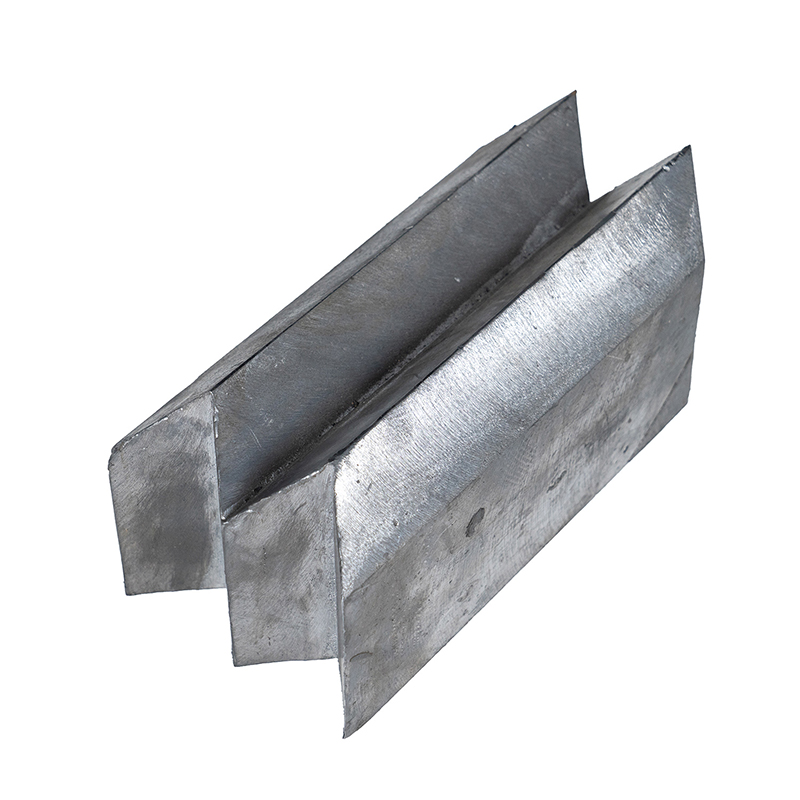
Upgrading from flat edges introduces advanced engineering mechanics. The Ordinary Interlocking Radiation Lead Brick utilizes a cast manufacturing process. It features a distinct "Chevron" (V-shaped) tongue-and-groove joint. This geometric design completely changes how you build protective walls.
The primary advantage lies in its geometry. The V-shape naturally defeats the straight-line "shine path" of scatter radiation. High-energy particles cannot travel through the angled interlocking joint. Furthermore, this design proves highly stable against tipping. You can build robust, free-standing protective walls without using any structural mortar.
Some facility designs feature non-standard room geometries or highly specialized enclosures. These complex layouts require precision engineering. The Custom Interlocking Radiation Lead Brick meets these exact precision needs. Manufacturers machine these systems using advanced milling techniques.
Instead of cast V-shapes, these utilize U-shaped or horseshoe-shaped grooves. Machining allows for incredibly tight tolerances. You use them when building custom-angled corners, specialized viewing window frames, or unique ceiling interfaces. They guarantee a perfect, gap-free fit for intricate architectural designs.
Profile Type | Joint Mechanism | Best Use Case | Installation Method |
|---|---|---|---|
Standard / Flat | Straight Edge | Hidden concrete wall embeds | Double-row, staggered pattern |
Ordinary Cast Interlocking | V-Shaped (Chevron) | Standard medical vault retrofits | Single-row, mortarless stacking |
Custom Machined Interlocking | U-Shaped / Horseshoe | Complex, non-standard enclosures | Precision-fitted assembly |
Procuring raw, untreated shielding materials introduces significant facility risks. Lead exists as a highly malleable, exceptionally soft metal. Bare blocks remain prone to physical denting during standard shipping and transport. Simple handling can deform their sharp interlocking edges.
Beyond physical damage, bare surfaces react poorly to environmental factors. Exposure to ambient humidity causes rapid oxidation. This chemical reaction creates toxic white or yellow lead salt powders on the exterior surface. Personnel touching these bare surfaces risk accidental ingestion or skin contamination.
Metallurgists solve this softness issue through strategic alloying. Industry best practices rely on the "4% Antimony Rule." Blending pure stock with roughly 4% antimony significantly increases structural hardness. This specialized alloy resists dents, scratches, and edge deformation.
Harder interlocking joints fit together more securely. They limit handling damage during complex installations. While pure variants cost slightly less, the antimony alloy provides necessary durability for exposed, high-traffic industrial environments.
Modern safety protocols demand complete encapsulation to eliminate toxicity risks. Facilities utilize two primary methods to seal surfaces and protect technicians.
Epoxy painting stands as the most cost-effective method to seal microscopic dust. A strong polymer epoxy shell allows maintenance teams to use standard wet-wipe cleaning protocols. It physically prevents oxidation and keeps the workspace clean.
Powder coating and stainless steel encapsulation serve more rigorous environments. You find these premium finishes in strict cleanroom environments, like PET radiopharmacies. Complete stainless encapsulation ensures zero cross-contamination. It allows medical staff to meet strict EHS sterilization standards using aggressive chemical disinfectants.
Designing a shielding vault requires transparent weight data. A standard 2" x 4" x 8" block weighs approximately 26 to 27 lbs. When you stack hundreds of these to form a protective wall, the cumulative weight grows exponentially.
Facility flooring must support massive localized pressure. Point-load engineering assessments on facility flooring are absolutely mandatory. Before you stack heavy-duty barriers, structural engineers must verify slab integrity. Ignoring this prerequisite can result in catastrophic structural floor failure.
Applying dense shielding incorrectly poses severe physical dangers. A crucial physics rule dictates how you handle different particle types. You must never use dense materials to shield high-energy Beta particles directly.
When high-energy Beta particles interact with heavy atomic nuclei, rapid deceleration occurs. This beta-lead interaction causes secondary X-rays, known as Bremsstrahlung radiation. Shielding Beta particles with pure high-density metal actually creates a new, highly penetrating radiation hazard. We strongly advise layered shielding for mixed-radiation environments. Engineers typically specify a primary low-Z barrier (like acrylic or plastic) to stop Beta particles, followed by a secondary dense barrier to catch resulting X-rays.
Maintaining a safe laboratory or medical room requires strict procedural discipline. EHS guidelines establish clear rules for handling and maintaining these environments.
Prohibit dry-sweeping: Never dry-sweep floors near shielding walls. Brooms push toxic dust into the breathable air column.
Mandate wet-cleaning: Use wet mops, damp wipes, or certified HEPA vacuums for all routine maintenance.
Restrict loose usage: Prohibit the use of loose blocks as improvised "doorstops." Never leave unencapsulated weights sitting in lab spaces. This prevents accidental surface contamination.
Financial officers view facility upgrades through a strategic lens. Standard poured concrete vaults become permanent real estate. You cannot move them. Conversely, you should frame modular interlocking systems as movable assets.
Because crews can dismantle and relocate these walls, accountants often classify them as capital equipment. This classification offers distinct financial advantages. Movable capital equipment typically enjoys faster tax depreciation schedules compared to permanent drywall or concrete additions. This distinction dramatically improves your facility's financial return.
Project managers must set realistic procurement expectations to avoid costly delays. Manufacturing processes dictate varying supply chain timelines.
Standard flat profiles usually ship within 2 to 3 weeks. If you specify epoxy painted or powder-coated surfaces, expect a lead time of 3 to 6 weeks for curing and quality assurance. Complex projects requiring custom machined interlocking components take the longest. Milling precise U-shaped grooves demands 4 to 8 weeks of lead time. Plan your construction schedules around these specific manufacturing realities.
Traditional construction materials offer zero residual value upon demolition. High-density shielding systems operate differently. Pure antimony alloys retain massive intrinsic commodity value.
Highlight the high scrap value of the raw material. Many reputable suppliers offer structured demolition and buyback programs. When a clinic closes or relocates, the supplier will dismantle the walls and repurchase the blocks. This end-of-life recovery strategy drastically improves the overall ROI of the shielding system.
Choosing the correct radiation barrier is never a simple material purchase. Choosing between standard flat profiles and sophisticated interlocking systems requires a careful calculation. You must evaluate spatial constraints, strict RPA mandates, and long-term facility flexibility.
Modern applications favor interlocking chevron designs due to their inherent structural stability and leak-proof geometry. Proper alloy selection and epoxy encapsulation guarantee a safe, compliant environment for your staff. By treating these systems as depreciable, movable assets, facilities can maximize their financial returns.
If you are planning a room upgrade, proactive engineering stops costly delays. Encourage your procurement officers and facility engineers to request 3D room modeling. Submit your RPA's lead-equivalent specifications early to ensure highly accurate weight and cost calculations.
A: You will receive approximately 38 standard 2" x 4" x 8" bricks in a 1,000 lb order. This calculation factors in a typical individual weight of roughly 26.2 lbs per unit. Knowing this exact count helps buyers estimate accurate freight costs and plan site logistics.
A: Standard flat bricks can be cut, but doing so generates hazardous dust requiring strict respiratory PPE and environmental containment. Interlocking bricks should ideally be pre-machined at the factory. Field cutting an interlocking piece destroys the vital tongue-and-groove joint, compromising radiation safety.
A: Pure lead remains very soft and slightly more cost-effective. It works best for internal, hidden wall-casting. Antimony lead blends 4% antimony to create a much harder metal. This alloy resists physical damage, denting, and corner deformation in exposed, high-traffic industrial applications.


