

Views: 0 Author: Site Editor Publish Time: 2026-05-31 Origin: Site


Material longevity determines the success or failure of countless engineering and outdoor projects. Sourcing the right components requires looking beyond initial costs. You must understand long-term environmental interactions. Whether you need materials for outdoor applications or specialized industrial shielding, structural integrity matters immensely.
Many professionals confuse ferrous rust with non-ferrous oxidation. This confusion often leads to misguided material choices. Iron and steel rust in ways causing deep structural failure. Lead behaves differently. While lead does not rust, it is not entirely immune to environmental degradation. It reacts to its surroundings in unique ways.
This article provides procurement managers, engineers, and outdoor application buyers an evidence-based evaluation framework. You will learn how lead compares to alternatives regarding corrosion resistance, environmental compliance, and structural stability. We will guide you through making informed, application-specific sourcing decisions for your exact needs.
Surface Oxidation vs. Structural Rust: Lead shot forms a protective outer layer (patina) when exposed to air and moisture, preventing deep structural corrosion, unlike untreated steel.
Environmental Degradation: In highly acidic soils or submerged aquatic environments, lead slowly breaks down, releasing toxic compounds—the primary driver behind modern regulatory bans.
Material Alternatives: Corrosion-inhibited copper, bismuth, and tungsten are increasingly adopted to bypass lead's environmental and regulatory liabilities.
Industrial Viability: In controlled, non-corrosive environments (e.g., radiation shielding, ballast), high-purity lead remains a superior, cost-effective choice.
To evaluate material longevity, we must first define how lead interacts chemically with its environment. People frequently ask if lead rusts. Scientifically, rust only occurs in ferrous metals containing iron. Lead contains no iron. However, it does oxidize.
When you expose raw lead to oxygen and moisture, a chemical reaction begins immediately. The surface reacts to form lead oxide. Over time, exposure to carbon dioxide in the air converts this oxide into lead carbonate. This process alters the visual appearance of the metal. The originally bright, shiny surface transforms into a dull gray or white color. Many buyers mistake this discoloration for structural failure. In reality, it represents a natural stabilization process.
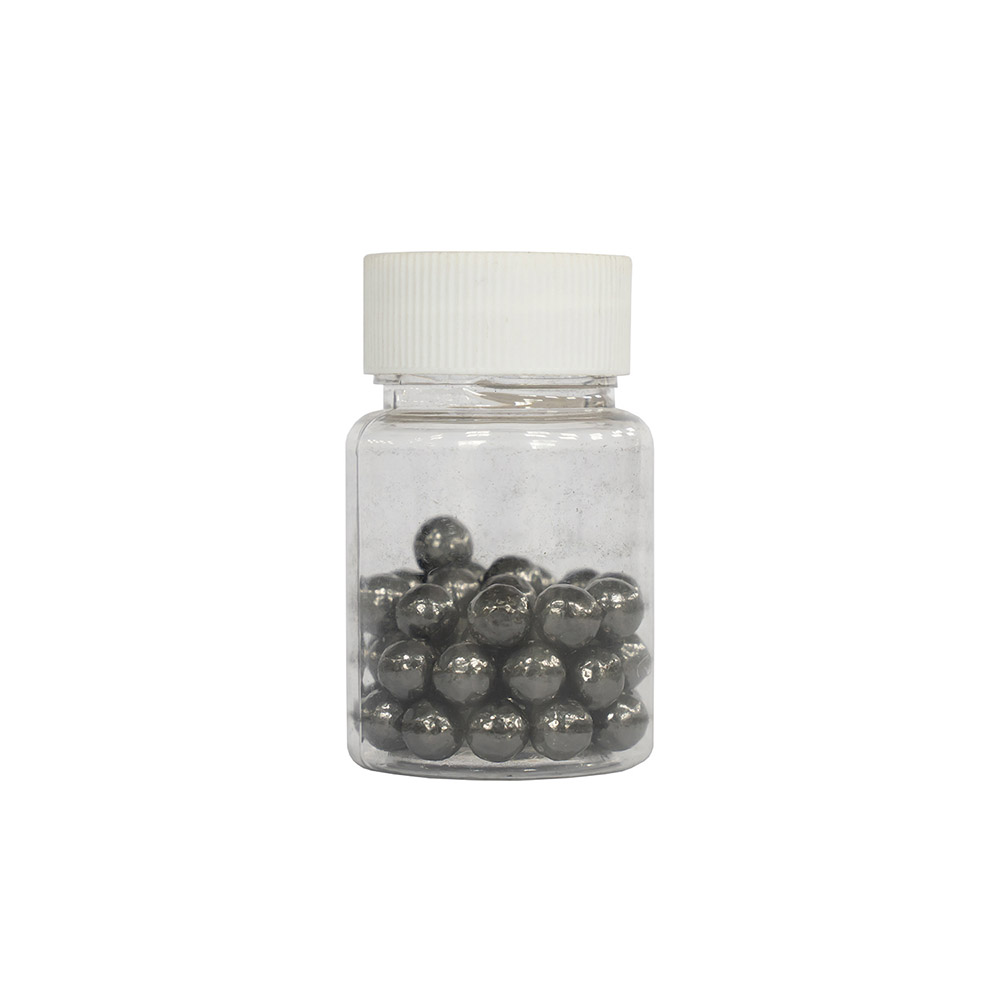
This dull gray or white surface layer acts as a highly effective protective barrier. We call this barrier a patina. Once the patina forms, it seals the underlying metal away from oxygen and moisture. The patina prevents deeper structural degradation. Because of this self-sealing characteristic, Lead Shot often maintains its structural integrity for decades in stable environments. Unlike steel, it will not flake away or hollow out from the inside.
Despite its natural patina, lead remains vulnerable under specific extreme conditions. You must account for these vulnerabilities during your sourcing process.
Acidity (pH levels): Highly acidic soils rapidly accelerate lead degradation. When the soil pH drops below 6.5, the acid dissolves the protective carbonate patina. The soil then continually strips away newly formed oxidation layers. This continuous stripping slowly consumes the underlying metal.
Aquatic Submersion: Continuous exposure to water also breaks down lead over time. Scientific consensus shows submerged lead slowly leaches heavy metal compounds. Moving water physically erodes the soft patina, while dissolved oxygen fuels ongoing oxidation.
Buyers often discard oxidized lead thinking it has lost its mass or density. Never confuse surface discoloration with structural failure. A white powdery surface simply means the lead has formed its natural carbonate shield. You only need to worry if the material sits in acidic or submerged environments.
Modern engineering and outdoor applications demand rigorous material comparisons. Environmental bans and performance needs have driven the market to develop several alternatives. You must weigh these alternatives against traditional lead.
Steel provides a cheap, readily available alternative. However, steel is highly susceptible to rapid rust and pitting if exposed to moisture. It lacks a self-healing patina. To prevent failure, manufacturers must apply thick protective coatings. Furthermore, steel has a significantly lower density than lead. Lower density reduces kinetic energy transfer and limits its effectiveness as a compact weight.
Bismuth and tungsten offer excellent corrosion resistance. They do not leach toxic compounds into soil or water. Tungsten actually exceeds lead in overall density, providing superior performance for compact shielding or ballistics. Unfortunately, these metals come with a significantly higher procurement cost. Their raw material scarcity makes them impractical for high-volume, budget-constrained projects.
Manufacturers now produce corrosion-inhibited copper as a modern, government-approved non-toxic alternative. Specialized coatings protect the copper from environmental degradation. It resists moisture brilliantly. However, copper alters ballistic and wear profiles. It is harder than lead, which can cause increased friction and wear inside deployment systems.
You face a strict trade-off analysis. You must balance upfront cost against density requirements and long-term material stability. The table below summarizes these critical comparisons.
Material | Corrosion Resistance | Density Profile | Relative Cost | Environmental Compliance |
|---|---|---|---|---|
Lead | High (Forms protective patina) | Excellent (11.34 g/cm³) | Low | Poor (Regulated/Banned outdoors) |
Steel | Low (Prone to rust) | Low (7.8 g/cm³) | Low | Excellent |
Bismuth | High | Good (9.78 g/cm³) | High | Excellent |
Tungsten | Very High | Superior (19.3 g/cm³) | Very High | Excellent |
Coated Copper | High | Good (8.96 g/cm³) | Moderate | Excellent |
Material performance only tells half the story. Today, legal and environmental compliance dictates material selection just as heavily as density or cost. You cannot ignore the regulatory landscape.
As established earlier, lead's actual corrosion rate is quite slow. However, the byproducts of its breakdown are highly toxic. When lead carbonate flakes off into soil, or when water dissolves lead oxide, heavy metals enter the ecosystem. Plants and animals absorb these toxins. The material itself does not fail mechanically, but its chemical legacy creates massive environmental hazards.
Government bodies heavily restrict lead usage in open environments. You must reference established frameworks before procurement. For example, the USDA and US Fish & Wildlife Service strictly mandate non-toxic materials in wetlands and ecologically sensitive areas. These agencies identified that birds ingest small lead spheres, mistaking them for seeds or grit. Gastric acids rapidly break down the metal, causing fatal poisoning.
Assess your legal and financial liabilities carefully. Deploying lead in restricted zones exposes your organization to severe fines and remediation costs. You must weigh these hidden risks against the higher upfront cost of compliant alternatives. Paying more for bismuth or coated copper initially often saves millions in legal liabilities later.
Always audit the deployment site's environmental designation before ordering materials.
Consult local environmental protection guidelines, as state laws often exceed federal restrictions.
Request formal non-toxicity certifications from suppliers when purchasing alternative metals.
The environmental bans discussed above primarily target outdoor and aquatic applications. We must reframe the use case for indoor, controlled environments. In these settings, environmental leaching becomes a non-issue. Lead reclaims its position as the ultimate engineering material.
When you remove acidic soil and moving water from the equation, lead's vulnerabilities disappear. Industrial settings utilize lead for its pure physical properties. Engineers isolate the metal from ecosystems, neutralizing all toxicity risks. Here, its extreme density and low melting point make it unbeatable.
Medical, nuclear, and aerospace sectors rely heavily on isolated lead components. For instance, hospitals use a High Purity Shielding Lead Ball matrix to fill irregular cavities in radiation wall panels. Aerospace engineers use uniform lead spheres for precise weight distribution and ballast in aircraft. The high atomic number of lead effectively absorbs X-rays and gamma radiation. No affordable alternative provides this level of reliable attenuation.
In sealed, dry, or encapsulated environments, surface oxidation remains entirely irrelevant. The lead sits inside a steel casing or a sealed polymer drum. It never interacts with weather. It never touches groundwater. Under these conditions, buyers can safely maximize lead's unmatched density-to-cost ratio. You get superior structural weight and radiation protection without the environmental liability.
Selecting the right material requires a systematic approach. You cannot rely on guesswork. Follow this step-by-step framework to determine if lead suits your specific application.
First, analyze where the material will live. Is the material exposed to acidic soil or water? Will it face daily weather changes? If so, traditional lead poses a high environmental risk. Conversely, will the material sit in a controlled indoor space? Will you encapsulate it inside another structure? If you answer yes to encapsulation, lead remains highly viable.
Next, check the law. Do local or federal environmental regulations strictly mandate non-toxic materials for your project zone? Review USDA guidelines or local EPA equivalents. If regulations ban heavy metals on your site, you must pivot to steel, copper, or bismuth immediately.
Finally, run the numbers. Weigh the cheap procurement of standard Industrial Lead Products against premium alternatives. Tungsten offers incredible density but shatters budgets. Coated copper meets compliance but alters mechanical wear. If you operate in a safe, controlled environment, standard lead provides the best financial return over a fifty-year lifespan.
Once you finish your analysis, take action. Request Material Safety Data Sheets (MSDS) from your suppliers. Consult with manufacturing specialists regarding high-purity variants for shielding applications. Always order small test batches to verify material compatibility before committing to a massive procurement contract.
Summary: Lead exhibits high resistance to deep structural failure thanks to its self-sealing patina. However, it remains highly vulnerable to regulatory scrutiny due to toxic leaching in wet or acidic environments.
Final Verdict: Lead serves as the ideal, cost-effective material for controlled industrial and shielding applications. Conversely, industries are aggressively phasing it out for outdoor and wetland use.
Call to Action: Evaluate your specific environmental constraints and regulatory requirements today. Contact a specialized material consultant to help you navigate your next procurement cycle safely and efficiently.
A: No, it does not rust because it contains no iron. Rust is an iron-specific reaction. However, it will slowly oxidize. Submersion in water gradually strips away this oxidation, leaching toxic heavy metals into the surrounding environment.
A: No, this white powder is lead carbonate. It forms a natural patina when lead interacts with oxygen and carbon dioxide. It actually protects the deeper metal. However, it is toxic and requires safe handling protocols.
A: While excellent for outdoor compliance, copper lacks the atomic density required for specific industrial tasks. It cannot effectively replace high-purity lead in demanding radiation shielding or compact ballast applications.
A: It takes decades to centuries for lead to completely degrade. The exact timeline depends heavily on environmental factors, particularly soil acidity (pH) and continuous moisture levels.


