

Views: 0 Author: Site Editor Publish Time: 2026-05-29 Origin: Site


Nuclear medicine and theranostics present a persistent clinical challenge. Medical staff must protect their extremities from localized radiation exposure. They handle dangerous radiopharmaceuticals daily. Isotopes like Tc-99m and FDG F-18 require careful preparation, transport, and administration. Enter the industry-standard upgrade. Clinicians now use Tungsten Alloy Syringe Shielding to replace legacy materials. These advanced shields balance maximum attenuation and ergonomic control. They keep your staff safe without compromising precision.
This guide provides an evidence-based framework for evaluation. Procurement teams, radiopharmacists, and clinical safety officers will learn how to select the right shielding. We will explore physical properties, design features, and workflow integration. You will discover how to match specific clinical workflows to the optimal shield configuration. By the end, you will understand how to build a complete, safe handling ecosystem for your department.
Material Superiority: Tungsten alloys achieve equivalent radiation attenuation to lead while requiring approximately 33% less material thickness, improving grip and control.
Isotope-Specific Matching: Attenuation rates exceed 99% for common diagnostic isotopes (like Tc-99m) but require specific thickness configurations for high-energy PET or Beta applications.
Ergonomics Drive Safety: High-quality shields feature fully encapsulated lead glass, internal high-visibility coatings, and workflow-specific locking mechanisms (clip vs. screw).
Workflow Integration: Effective shielding extends beyond the syringe, requiring compatible transport systems and storage configurations to maintain a closed safety loop.
Understanding radiation protection starts at the atomic level. Shielding effectiveness relies heavily on material density. Tungsten alloys offer unmatched physical properties for medical environments.
Tungsten boasts a profound density advantage. Medical-grade tungsten alloys range from 18.89 to 19.25 g/cm³. This makes the material roughly 1.7 times denser than lead. Denser atomic packing equates directly to higher resistance against ionizing radiation. When gamma rays or X-rays strike the material, dense electron clouds absorb their energy. The high atomic number (Z=74) maximizes the photoelectric effect. This process effectively traps harmful photons before they reach the operator's hands.
Clinical buyers require verifiable performance metrics. Standard 2mm thickness designs yield exceptional results for routine diagnostics. These shields provide greater than 99% attenuation for Tc-99m. High-energy isotopes require different considerations. For instance, a standard 2mm shield achieves approximately 88% attenuation for FDG F-18. Departments often utilize thicker walls for PET applications to reach safe exposure limits. You must always review half-value layer (HVL) specifications for your exact radiopharmaceuticals.
Hospitals demand equipment built for rigorous daily use. Tungsten alloys deliver high tensile strength. Manufacturers often rate these alloys up to 142,137 psi. This structural stability prevents denting or warping if dropped. Lead, conversely, deforms easily upon impact. Furthermore, tungsten is non-toxic and environmentally stable. Lead requires hazardous disposal protocols. Clinics eliminate toxic waste management burdens by adopting tungsten equipment.
Best Practice: Always request material certifications from your vendor. Ensure the tungsten alloy contains no harmful impurities. High-quality blends usually incorporate nickel and iron for optimal machineability and strength.
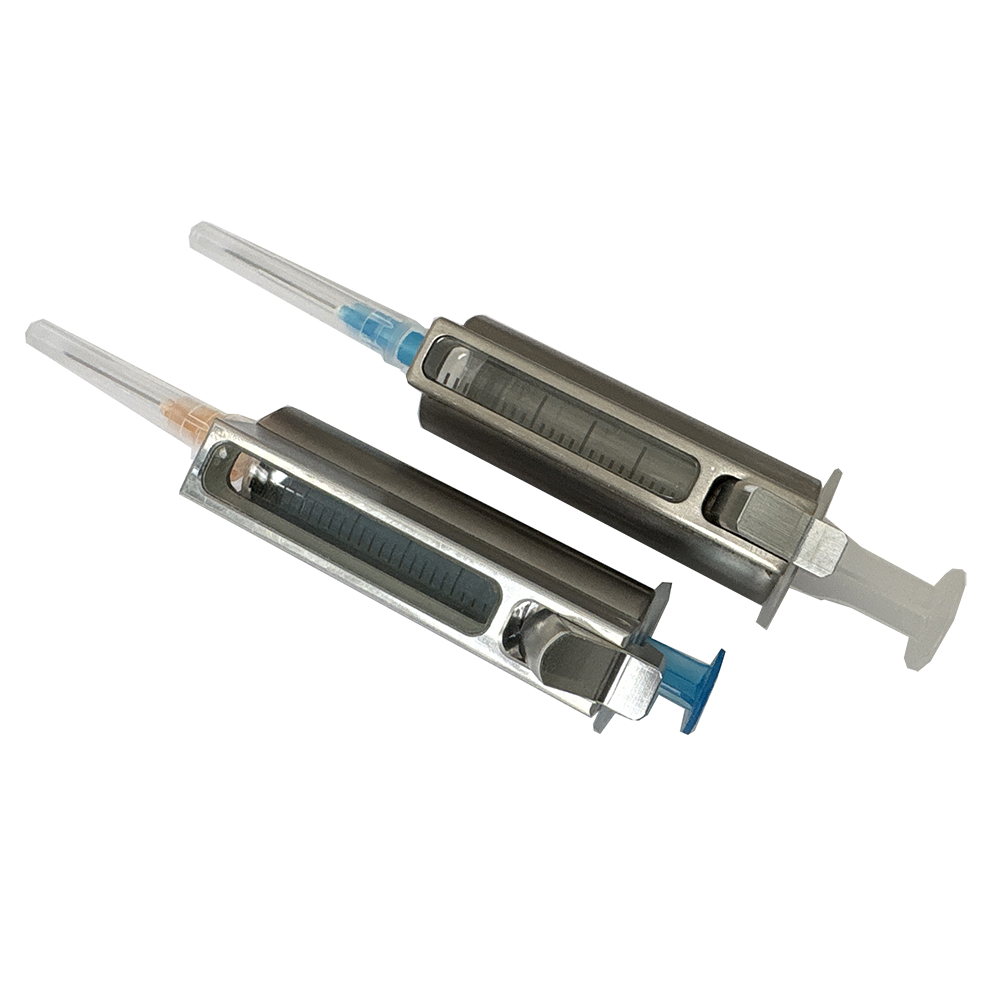
Procurement teams often weigh the benefits of upgrading from legacy lead equipment. The physical differences between these materials impact daily clinical operations profoundly. Let us examine the practical advantages.
Physical profiles dictate ergonomic success. Tungsten's higher density allows for much thinner walls. You can achieve identical radiation absorption using roughly 33% less material thickness. Traditional lead pigs feel clunky and cumbersome. Thick lead walls force awkward hand positions during injections. Thinner tungsten walls prevent this ergonomic nightmare. Radiopharmacists maintain a natural grip. This direct reduction in bulk significantly lowers hand fatigue during multiple daily injections.
Medical tools must endure harsh sterilization. Lead is highly susceptible to oxidation. It degrades rapidly when exposed to acidic or alkaline cleaning agents. Repeated cleaning causes lead to shed toxic dust. Tungsten alloys withstand rigorous, high-frequency clinical sterilization protocols. They do not pit, oxidize, or release dangerous particles. Your staff can wipe them down constantly without degrading the surface.
Common Mistake: Never submerge older lead-based shields in strong clinical solvents. The chemical reaction can strip protective coatings. This exposes staff directly to bare lead.
Specification | Tungsten Alloy | Traditional Lead |
|---|---|---|
Density | ~18.89 - 19.25 g/cm³ | ~11.34 g/cm³ |
Wall Thickness Needed | Minimal (Thinner profile) | Thick (Clunky profile) |
Toxicity | Non-toxic, safe to handle | Highly toxic, requires protocols |
Durability | High tensile strength, dent-resistant | Soft, deforms upon impact |
Evaluating different models on the market requires a structured approach. A decision-stage framework helps buyers identify crucial features. Do not base decisions solely on base material. You must scrutinize engineering details.
Visibility prevents critical dosing errors. The viewing window represents the most vulnerable part of any shield.
Encapsulation: Assess the lead glass installation. High-density lead glass usually measures 5.2 g/cm² in density. The glass must sit flush and fully encapsulated within the tungsten barrel. Poorly fitted windows create dangerous radiation leak paths. Fully encapsulated designs protect the brittle glass from shattering during accidental drops.
Visual Clarity: Dosage preparation demands absolute precision. Look for models featuring a bright white internal coating. This internal contrast enhances fluid visibility drastically. Radiopharmacists can easily detect microscopic air bubbles against a white background. Dark interiors mask these bubbles, risking inaccurate dosage administration.
The lock holds the syringe safely inside the barrel. Different clinical environments require different closure systems. Evaluate these options based on your workflow pace.
Clip-Lock / Spring-Lock: Best suited for fast-paced environments. High-volume diagnostic centers require rapid engagement and release. A simple press mechanism secures the syringe instantly. It saves vital seconds during busy shifts.
Twist-Lock / Big-Screw: Best for maximum stability. Theranostics and high-pressure injections demand absolute security. A screw mechanism prevents accidental disengagement during transport. It locks the syringe down firmly, eliminating all internal movement.
A mismatched shield compromises safety. Ensure the manufacturer provides a comprehensive, color-coded size matrix. Shields must accommodate standard commercial syringes exactly. Excess internal play allows the syringe to rattle. This degrades control during venipuncture. A proper sizing matrix typically covers 1ml, 3ml, 5ml, and up to 10ml volumes.
Syringe Size | Typical Shield Length | Recommended Application | Color Code (Example) |
|---|---|---|---|
1 ml | ~70 mm | Pediatric / Precise micro-dosing | Red |
3 ml | ~75 mm | Standard Nuclear Medicine | Blue |
5 ml | ~80 mm | Cardiac Imaging | Green |
10 ml | ~90 mm | Bulk preparation / Washout | Yellow |
There is no universal solution for radiation protection. Different radioactive isotopes emit varying types of energy. You must match the shield geometry to the specific clinical application.
Routine diagnostics primarily utilize low-energy gamma emitters. Technetium-99m serves as the industry workhorse. A standard 2mm tungsten thickness provides the optimal balance here. It blocks nearly all radiation while remaining incredibly light. Clinicians perform dozens of injections daily. The lightweight 2mm profile prevents cumulative wrist strain. Standard clip-lock designs excel in this high-throughput environment.
Positron Emission Tomography involves high-energy annihilation photons. FDG F-18 emits 511 keV gamma rays. These high-energy applications demand specialized equipment. You need thicker tungsten profiles to achieve safe attenuation levels. Specialized PET syringe shields often feature 5mm to 9mm thick walls. They weigh significantly more than standard models. Twist-lock mechanisms ensure heavy PET shields do not slip during handling. Theranostic workflows also rely on these robust designs for targeted radionuclide therapy.
Beta emitters introduce complex physics into shielding design. Isotopes like Yttrium-90 or Lutetium-177 fire high-speed electrons. If beta particles hit a high-density material like tungsten directly, they decelerate rapidly. This rapid deceleration produces secondary X-rays. Physicists call this phenomenon Bremsstrahlung. Therefore, pure tungsten alone presents a hazard for pure beta emitters. You must evaluate dual-layer models for these workflows. An inner layer of low-density polymer or acrylic absorbs the beta particles safely. The outer tungsten layer blocks any trace secondary radiation. This dual-layer approach ensures absolute safety.
Effective radiation safety requires a holistic approach. A syringe shield protects hands during injection. However, it does not solve environmental exposure during transit. You must build a closed safety loop across the entire facility.
Nurses and technicians constantly move doses from the hot lab to patient rooms. Carrying an exposed shielded syringe down a hospital corridor violates best practices. Ambient radiation can still affect bystanders over distance. You must implement secondary containment. A dedicated Tungsten Alloy Syringe Protective Cover Transport Box mitigates this ambient exposure. These heavy-duty carriers encapsulate the entire syringe setup. They feature thick lead or tungsten walls and robust carrying handles. This ensures nurses can transport high-activity doses through public hospital corridors safely. The transport box acts as a mobile vault.
Radiopharmacies handle massive amounts of source materials daily. Managing bulk waste and fresh eluate requires meticulous planning. The hot lab environment serves as the heart of nuclear medicine. Technicians draw individual doses from large multi-dose vials. You cannot leave these highly active vials sitting on a benchtop. Comprehensive hot lab setups utilize customized shielded containers. Facilities rely on heavy-duty pigs to Store Western Shower Bottles Tungsten Alloy Cans and other specialized radioactive vial formats. These heavy enclosures ensure end-to-end environmental safety before individual doses are drawn. They provide a safe docking station for generators and bulk inventory. Proper storage eliminates background radiation spikes in the lab.
Upgrading your department's shielding equipment requires strategic planning. Implementing advanced protective gear is not just a basic material substitution. It represents a strategic investment in clinical ergonomics and regulatory safety compliance. Tungsten eliminates the physical bulk of lead. It prevents toxic degradation during daily cleaning. Your staff gains precision and comfort during complex venipuncture procedures.
Consider the following action-oriented next steps for your procurement team:
Audit your current isotope usage to separate standard gamma workflows from high-energy PET applications.
Assess clinical staff feedback regarding their lock-mechanism preferences to ensure adoption.
Inspect all current lead glass viewing windows for cracks, fogging, or exposed edges.
Request sample units from manufacturers for ergonomic testing before executing a department-wide rollout.
By closing the loop with proper transport boxes and bulk storage, your facility achieves comprehensive radiation safety. Protect your frontline workers by choosing engineered precision.
A: A standard 2mm thickness suits most routine gamma isotopes like Tc-99m. However, high-energy PET and theranostic applications require thicker profiles. You must consult specific half-value layer (HVL) calculations for isotopes like FDG F-18. PET shields often utilize 5mm to 9mm walls for adequate protection.
A: In many modern, fully encapsulated models, you cannot replace the glass on-site. Manufacturers require factory replacement if the window cracks. This strict protocol ensures zero radiation leakage occurs from improper reassembly. Clinics must prioritize robust, drop-resistant designs to minimize breakage risks.
A: You should wipe them down using standard clinical alcohol or approved surface disinfectants. Never completely immerse the shield in liquids. Avoid autoclaving unless the manufacturer explicitly certifies the product for high heat. Excessive heat and immersion can degrade the adhesive securing the lead glass window.


