Views: 0 Author: Site Editor Publish Time: 2026-02-24 Origin: Site


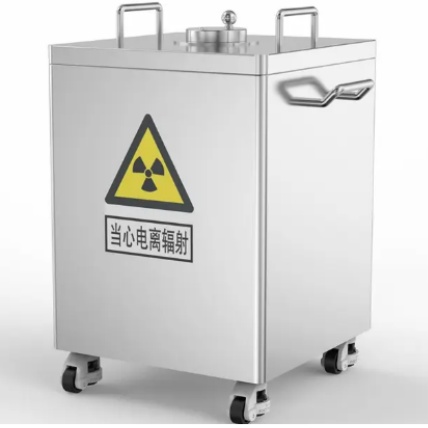
In modern nuclear medicine departments, space is often one of the most limited and valuable resources. As PET imaging and radiopharmaceutical workflows become more advanced, healthcare facilities face increasing pressure to balance safety, efficiency, and spatial constraints. One question we frequently hear from hospitals, clinics, and radiopharmacies is: Can PET unit dose cabinets really be compact without compromising radiation safety and operational performance?
From our perspective as a manufacturer focused on medical radiation shielding solutions, the answer is yes—PET cabinets can absolutely be compact, when they are designed with purpose, precision, and real clinical workflows in mind. Compact PET unit dose cabinets are not simply smaller versions of traditional designs; they are the result of optimized shielding structures, intelligent internal layouts, and a deep understanding of how PET isotopes are prepared, stored, and dispensed.
In this article, we explore what makes a PET unit dose cabinet compact, how space-saving designs are achieved safely, and why compact PET cabinets are becoming a practical necessity in modern nuclear medicine environments.
PET imaging departments often operate in environments where expansion is difficult or impossible. Older hospital buildings, urban clinics, and integrated imaging centers frequently face limitations such as:
Restricted room dimensions
Shared radiopharmacy spaces
High equipment density
Increasing patient throughput demands
In these settings, bulky radiation cabinets reduce workflow efficiency and limit staff movement. A compact PET unit dose cabinet allows facilities to maintain compliance with radiation safety standards while improving spatial utilization and staff ergonomics.
Compact design is not about reducing protection—it is about using space more intelligently.
A compact PET unit dose cabinet is defined not simply by being smaller in size, but by how effectively it uses space while maintaining full compliance with radiation safety and operational requirements. In nuclear medicine environments, compactness must never come at the expense of shielding integrity, dose accessibility, or user protection.
A truly compact PET cabinet is characterized by optimized external dimensions that are carefully engineered around real workflow needs. Instead of reducing size arbitrarily, compact designs focus on removing unused internal volume and unnecessary structural bulk while preserving all critical functions.
Key characteristics of a compact PET unit dose cabinet include:
Reduced footprint and depth, allowing installation in space-constrained radiopharmacies or imaging suites
Vertical storage optimization, making use of cabinet height rather than floor space
Integrated shielding geometry, where radiation protection is built into the structure rather than added externally
Efficient door and access mechanisms, minimizing clearance requirements and improving ergonomics
Rather than scaling down indiscriminately, compact PET cabinets are engineered to align internal storage geometry with dose container dimensions, vial handling routines, and shielding requirements. This approach ensures that every cubic centimeter inside the cabinet serves a functional purpose.
In practice, compact PET unit dose cabinets are often the result of collaboration between shielding engineers and nuclear medicine professionals, ensuring that reduced size supports—rather than hinders—daily operations.
PET isotopes emit high-energy gamma radiation, which historically led to bulky cabinet designs with uniformly thick shielding. These traditional cabinets prioritized conservative safety margins but often resulted in oversized structures that consumed valuable space.
Modern PET unit dose cabinets overcome this challenge through advanced material selection and structural optimization, enabling compact designs without compromising radiation protection.
Precise lead or tungsten thickness, calculated based on isotope energy levels and maximum activity
Strategic shielding placement, focusing protection only where exposure risk exists
Reinforced hot spots, particularly around vial storage and access points
Structural integration of shielding, embedding protective materials directly into cabinet walls and doors
Instead of applying uniform shielding across all surfaces, compact PET cabinets use targeted shielding strategies that match real radiation emission patterns. This significantly reduces unnecessary bulk while maintaining compliance with radiation safety standards.
Design Aspect | Traditional Cabinet | Compact PET Cabinet |
Shield layout | Uniform, oversized | Targeted, optimized |
Internal volume | Underutilized | Fully functional |
Footprint | Large | Reduced |
Radiation safety | Compliant | Compliant |
A compact PET unit dose cabinet does not mean thinner protection—it means smarter protection, achieved through engineering precision rather than overcompensation.
One of the most effective ways to reduce cabinet size is by rethinking how space is organized internally. Internal layout optimization plays a critical role in transforming a traditional PET cabinet into a compact, workflow-efficient solution.
Compact PET cabinets typically feature:
Vertical vial positioning, allowing more doses to be stored without increasing footprint
Modular dose compartments, enabling flexible configuration based on isotope type or workflow
Sliding or pull-out shielded drawers, improving access while maintaining protection
Clearly separated access zones, reducing cross-contamination and handling errors
These layouts minimize wasted space while keeping doses clearly visible, logically arranged, and easy to retrieve. For nuclear medicine staff, this translates into shorter handling time, reduced physical strain, and lower radiation exposure during routine operations.
From an operational perspective, optimized internal layouts also improve inventory management. Technicians can quickly identify available doses, reduce unnecessary door openings, and maintain better control over time-sensitive PET isotopes.
Compact internal design is not only about fitting more into less space—it is about enabling safer, faster, and more predictable workflows.
Traditional swing doors require significant clearance in front of the cabinet, which can be problematic in narrow rooms or high-density clinical environments. To address this, compact PET unit dose cabinets often adopt alternative access systems designed specifically for space efficiency.
Common door solutions include:
Shielded sliding doors, which open horizontally without requiring additional clearance
Vertical lift doors, ideal for tight side-to-side installations
Counterbalanced access panels, offering smooth operation with minimal effort
These access mechanisms allow cabinets to be installed in tight spaces without limiting usability or staff movement. Importantly, shielding continuity is maintained regardless of door mechanism. Advanced sealing and overlapping shield designs ensure that radiation protection remains intact even during frequent access.
In addition to saving space, modern door systems improve ergonomics. Reduced opening force, smoother motion, and better visibility all contribute to safer handling practices—especially important in high-throughput PET environments.
By combining compact door systems with optimized internal layouts, modern PET unit dose cabinets achieve a balance between accessibility, safety, and spatial efficiency that traditional designs struggle to match.
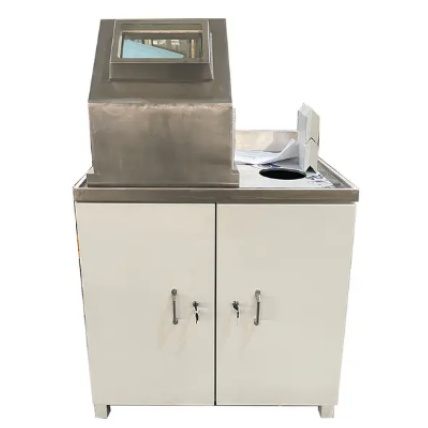
A smaller cabinet can actually improve workflow efficiency when properly designed.
Benefits include:
Shorter movement paths for staff
Easier integration near hot cells or dose preparation areas
Reduced clutter in controlled zones
Faster access to unit doses
By reducing unnecessary steps and improving spatial flow, compact PET cabinets support safer, more predictable operations.
Compact PET unit dose cabinets are particularly valuable in:
Renovation projects
Mobile or modular nuclear medicine units
Urban imaging centers
Multi-modality departments
Their reduced size allows placement where larger cabinets simply would not fit—without requiring costly building modifications.
While compact PET cabinets offer clear advantages, responsible design recognizes practical limits.
Design considerations include:
Maximum isotope activity per compartment
Required shielding thickness
Local regulatory requirements
Access needs for routine inspection
A well-designed compact PET cabinet balances size reduction with compliance and operational safety.
At Liaocheng ST Technologies Co., Ltd., we design PET unit dose cabinets based on real-world nuclear medicine workflows. Our compact cabinet solutions focus on:
High-efficiency radiation shielding
Space-saving structural design
Ergonomic access for technicians
Long-term durability and easy maintenance
We believe compact design should enhance safety and usability—not compromise it.
So, can PET cabinets be compact? Absolutely—when compactness is achieved through intelligent engineering rather than simple size reduction.
Modern PET unit dose cabinets demonstrate that it is possible to combine:
Effective radiation protection
Space-efficient design
Smooth clinical workflows
Regulatory compliance
For nuclear medicine facilities facing space limitations, compact PET cabinets are no longer an exception—they are becoming the standard.
If you are evaluating PET unit dose cabinet solutions that prioritize safety, efficiency, and space optimization, we invite you to learn more about how Liaocheng ST Technologies Co., Ltd. supports modern nuclear medicine environments with thoughtfully engineered shielding solutions.
Q1: Can compact PET unit dose cabinets provide the same radiation protection as larger cabinets?
Yes. When properly designed, compact PET cabinets use optimized shielding to meet the same radiation safety standards as larger units.
Q2: Are compact PET cabinets suitable for high-activity isotopes?
They can be, depending on activity levels and shielding design. Cabinet specifications should always match clinical requirements.
Q3: Do compact PET cabinets limit storage capacity?
Not necessarily. Efficient internal layouts often maintain or even improve usable storage capacity.
Q4: Where are compact PET unit dose cabinets most commonly used?
They are widely used in space-constrained hospitals, urban clinics, renovation projects, and modular nuclear medicine facilities.