Views: 0 Author: Site Editor Publish Time: 2026-02-20 Origin: Site


Lead containers are widely used in medical, industrial, and research environments where radiation shielding, hazardous material containment, or heavy-metal protection is required. One of the most common and important questions we hear from engineers, safety officers, and procurement teams is: are lead containers leak-proof?
The answer is not a simple yes or no. Lead containers can be leak-proof when they are properly designed, manufactured, and used within their intended application scope. Understanding what “leak-proof” really means in the context of lead containers is essential for selecting the right solution and ensuring long-term safety and compliance.
In this article, we explain how lead containers achieve leak resistance, what factors influence their sealing performance, how different designs compare, and how to evaluate whether a lead container is suitable for your specific application.
Lead containers are heavy-duty enclosures primarily designed for shielding and containment. Their high density makes lead extremely effective at blocking radiation and preventing exposure to hazardous materials.
Common applications include:
Medical imaging and nuclear medicine
Industrial radiography
Radioactive isotope storage and transport
Laboratory research and testing
Hazardous material handling
In many of these applications, preventing leakage—whether of radiation, dust, liquids, or gases—is just as important as shielding performance.
When discussing lead containers, the term “leak-proof” does not have a single, universal definition. Its meaning varies depending on application context, regulatory requirements, and the type of material being contained. In radiation protection and hazardous material handling, leak-proof performance must be evaluated from multiple perspectives rather than reduced to a simple yes-or-no condition.
For engineers, safety officers, and procurement professionals, understanding these distinctions is essential for selecting the correct container design and ensuring compliance with safety standards.
Radiation leakage refers to unintended radiation escaping from a lead container through:
Gaps between the lid and body
Seams or joints in assembled structures
Areas where shielding thickness is insufficient
Even small discontinuities in shielding geometry can create preferential paths for radiation emission. In medical and industrial radiography applications, minimizing radiation leakage is the primary function of a lead container. This requires not only adequate lead thickness but also precise mechanical alignment and overlap at all interfaces.
Material leakage refers to the escape of physical substances from inside the container, such as:
Radioactive powders or granulates
Liquids or chemical solutions
Contaminated air or aerosols
In many applications, especially isotope storage and transport, preventing material leakage is just as critical as blocking radiation. Even trace material release can pose safety, contamination, and regulatory risks. Effective lead container design must therefore incorporate sealing mechanisms that address both solid and fluid containment.
Environmental ingress occurs when external elements enter the container and compromise the stored contents. This includes:
Moisture infiltration
Dust or particulate ingress
Uncontrolled air exchange
While often overlooked, environmental ingress can degrade sensitive materials, increase corrosion risk, or compromise hygiene in medical environments. For long-term storage or transport, ingress prevention is a key component of overall container integrity.
A truly effective lead container must address all three aspects simultaneously—radiation containment, material sealing, and environmental protection—rather than relying on shielding thickness alone.
Lead itself is a dense, non-porous metal. In solid form, lead does not allow liquids, gases, or radiation to pass through its bulk material. From a material science perspective, lead provides excellent intrinsic resistance to penetration.
However, leakage risk in lead containers does not originate from the lead material itself. Instead, it arises from:
Joints between separate components
Lid-to-body interfaces
Seams in fabricated or assembled structures
This distinction is critical. Whether a lead container is truly leak-proof depends on design execution and manufacturing quality, not merely the presence or thickness of lead.
One of the most effective ways to achieve leak-proof performance in lead containers is through one-piece or seam-minimized construction. Lead containers manufactured using solid cast lead bodies or near-seamless designs inherently reduce the number of potential leakage points compared to containers assembled from multiple thin lead panels or segmented components.
Every seam or joint represents a potential weakness. Over time, mechanical stress, repeated opening and closing, or thermal expansion can cause slight misalignment at these interfaces. By minimizing the number of joints, one-piece construction significantly reduces:
Radiation escape points
Mechanical misalignment during long-term use
Progressive degradation at joints caused by handling or environmental exposure
For high-risk applications—such as radioactive isotope storage, medical imaging shielding, or laboratory containment—seam-minimized construction is often considered the most reliable structural solution.
The lid is the most critical component in determining whether a lead container can truly be considered leak-proof. Even a container with adequate lead thickness can fail if the closure system does not maintain consistent contact and alignment.
High-quality lead containers typically incorporate:
Overlapping lid geometries that block direct radiation paths
Recessed or stepped closures that enhance mechanical positioning
Tight tolerance machining to ensure uniform pressure distribution
These features work together to prevent both radiation leakage and the physical escape of contents. In practical use, lid design often becomes the decisive factor in overall leak-proof performance, especially in containers that are opened frequently.
To further enhance leak resistance, many lead containers include secondary sealing systems. Common options include rubber or elastomer gaskets for airtight sealing, PTFE or polymer liners for chemical compatibility, and composite inner containers that provide an additional containment layer.
These secondary elements improve liquid retention and air tightness while preserving the shielding properties of lead. In applications involving powders, liquids, or sensitive materials, secondary sealing is often essential for meeting regulatory and safety requirements.
Surface quality plays a critical but often underestimated role in leak prevention. Smooth internal and external finishes help eliminate micro-gaps at interfaces, reduce dust accumulation, and prevent corrosion-related degradation over time.
Proper surface finishing improves hygiene, simplifies cleaning, and supports long-term sealing performance—particularly important in medical, laboratory, and controlled industrial environments where cleanliness and reliability are mandatory.
Lead Container Type | Leak-Proof Capability | Typical Use |
Solid cast lead container | Very high | Radiation shielding |
Lead container with gasket | Excellent | Medical isotope storage |
Lead-lined steel container | High | Transport and handling |
Thin lead sheet enclosure | Moderate | Fixed shielding |
Lead containers can be designed to prevent liquid leakage, but this depends on internal design.
Important considerations include:
Presence of sealed inner liners
Use of corrosion-resistant coatings
Compatibility with stored substances
For corrosive or liquid materials, lead containers are often combined with stainless steel or polymer inner vessels to ensure full containment.
It is important to distinguish between:
Radiation shielding integrity
Physical containment integrity
A container may be excellent at blocking radiation but still require additional sealing measures for dust or liquid containment. High-performance designs address both simultaneously.
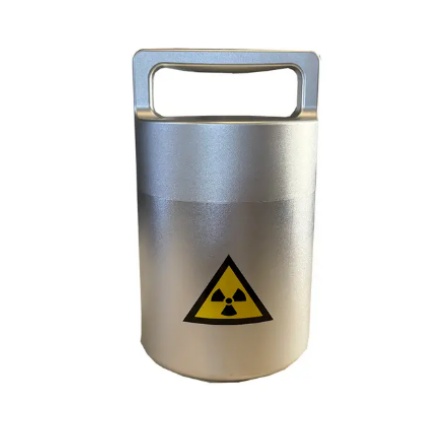
Quality manufacturers perform multiple checks, including:
Visual inspection of seams and joints
Dimensional tolerance verification
Radiation leakage testing
Pressure or containment integrity checks (where applicable)
These procedures ensure the container meets application-specific safety standards.
Leakage issues typically arise from:
Poor lid fit or worn closures
Inadequate gasket selection
Improper handling or impact damage
Use beyond intended application scope
Regular inspection and proper usage significantly reduce these risks.
When selecting a lead container, consider:
Type of material being stored
Required shielding level
Environmental conditions
Transport vs stationary use
Regulatory requirements
Matching the container design to the application is essential for reliable leak prevention.
Leak-proof performance is directly linked to:
Lead purity and density
Manufacturing precision
Assembly methods
Quality control standards
At Liaocheng ST Technologies Co., Ltd., we focus on controlled manufacturing processes that balance shielding performance with structural integrity and sealing reliability. By aligning container design with real-world usage scenarios, we help users achieve safer, more predictable outcomes.
So, are lead containers leak-proof?
The answer is yes—when they are properly designed, manufactured, and applied.
Lead itself is non-porous, but true leak-proof performance depends on container structure, lid design, sealing elements, and quality control. Understanding these factors allows users to select lead containers that provide both effective shielding and reliable containment.
For medical, industrial, and research applications where safety is non-negotiable, choosing a well-engineered lead container is a critical decision. With the right design and support, lead containers offer long-term, dependable protection.
1. Are lead containers airtight by default?
Solid lead is non-porous, but airtightness depends on lid design and sealing components.
2. Can lead containers leak radiation?
Radiation leakage may occur if shielding thickness or joint design is insufficient. Proper engineering prevents this.
3. Are lead containers suitable for liquid storage?
Yes, when combined with sealed inner liners or compatible containment systems.
4. How often should lead containers be inspected for leaks?
Regular inspection is recommended, especially for containers used in transport or high-frequency handling.